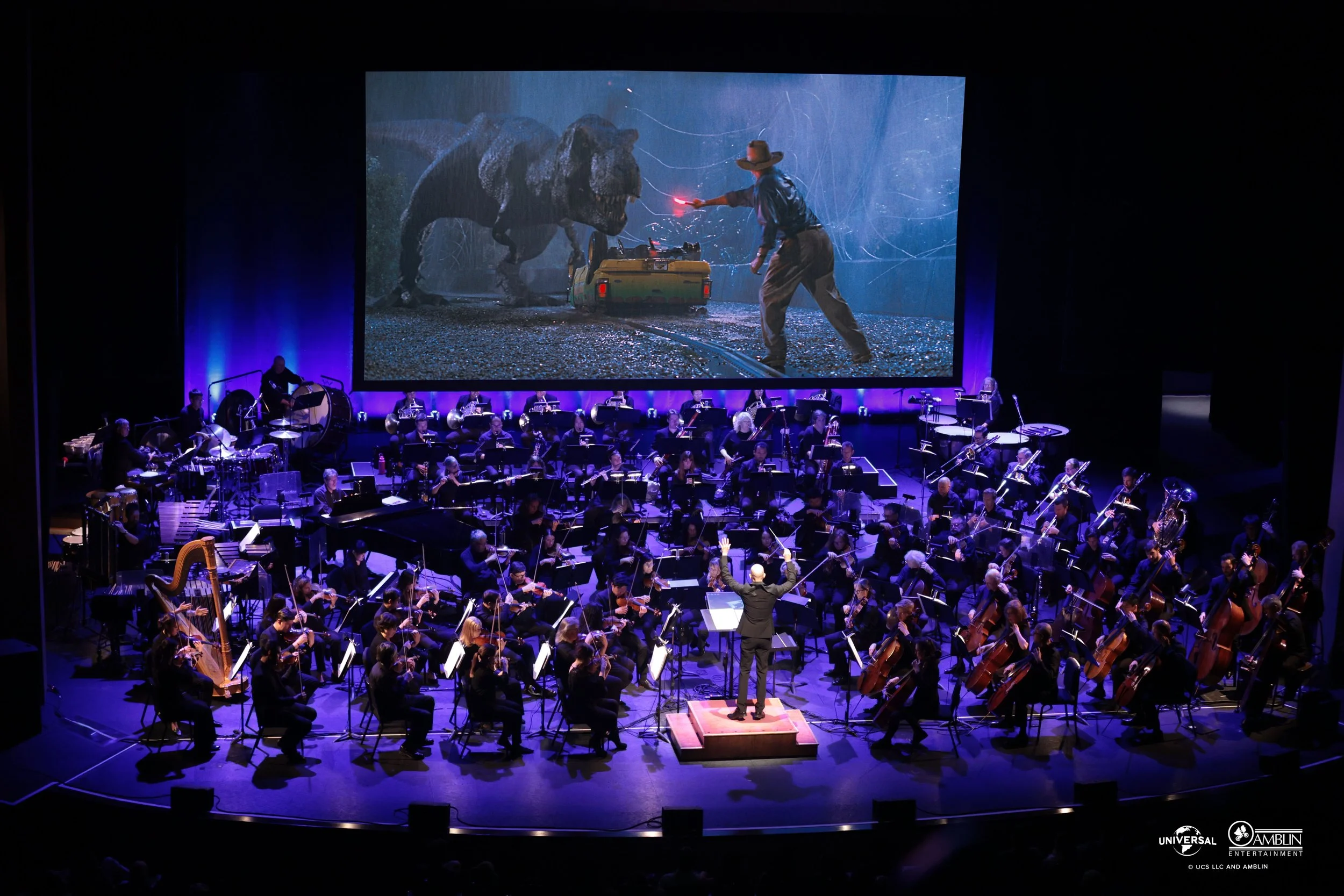
Digital Program: Jurassic Park in Concert
May 29, 2026 at 7:30 pm
May 30, 2026 at 2:00 pm
Modesto Symphony Orchestra
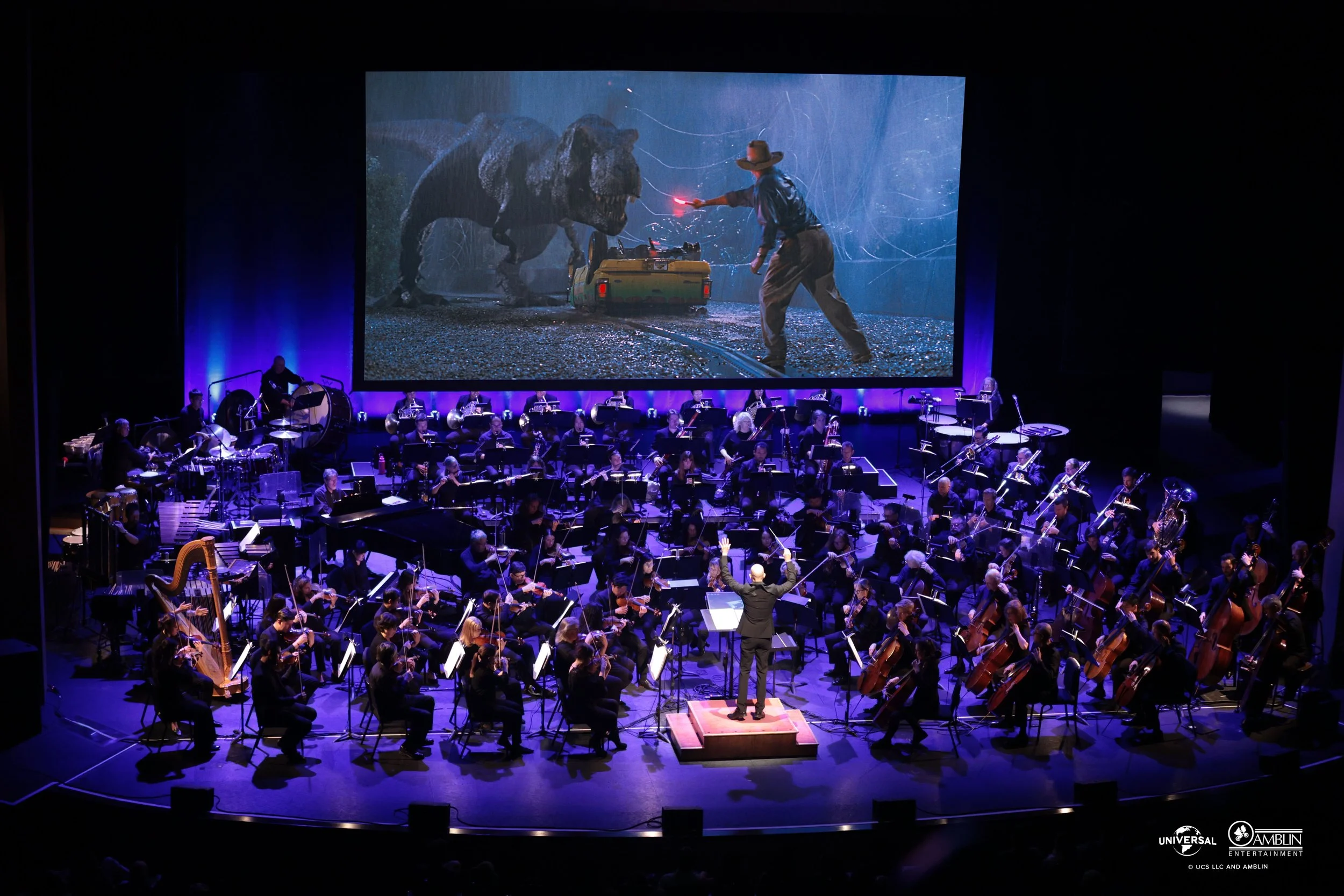
Jurassic Park in Concert
Friday, May 29, 2026; 7:30 pm
Saturday, May 30, 2026; 2:00 pm
Join Mobile MSO!
Text “PROGRAM” to (209) 780-0424
to receive a link to the concert program & text message updates prior to this performance!
By texting to this number, you may receive messages that pertain to the Modesto Symphony Orchestra and its performances. msg&data rates may apply. Reply HELP for help, STOP to cancel.
About this Performance

Digital Program: Carmina Burana
May 8 & 9, 2026 at 7:30 pm
Modesto Symphony Orchestra
Carmina Burana
Friday, May 8, 2026; 7:30 pm
Saturday, May 9, 2026; 7:30 pm
Join Mobile MSO!
Text “PROGRAM” to (209) 780-0424
to receive a link to the concert program & text message updates prior to this performance!
By texting to this number, you may receive messages that pertain to the Modesto Symphony Orchestra and its performances. msg&data rates may apply. Reply HELP for help, STOP to cancel.
About this Performance

Program Notes: Carmina Burana
Notes about:
Giovanni Gabrieli, arr. Hersh: Canzon per sonar noni toni a 12
Mikhail Glinka: Ruslan and Ludmilla Overture
Carl Orff: Carmina Burana
Program Notes for May 8 & 9, 2026
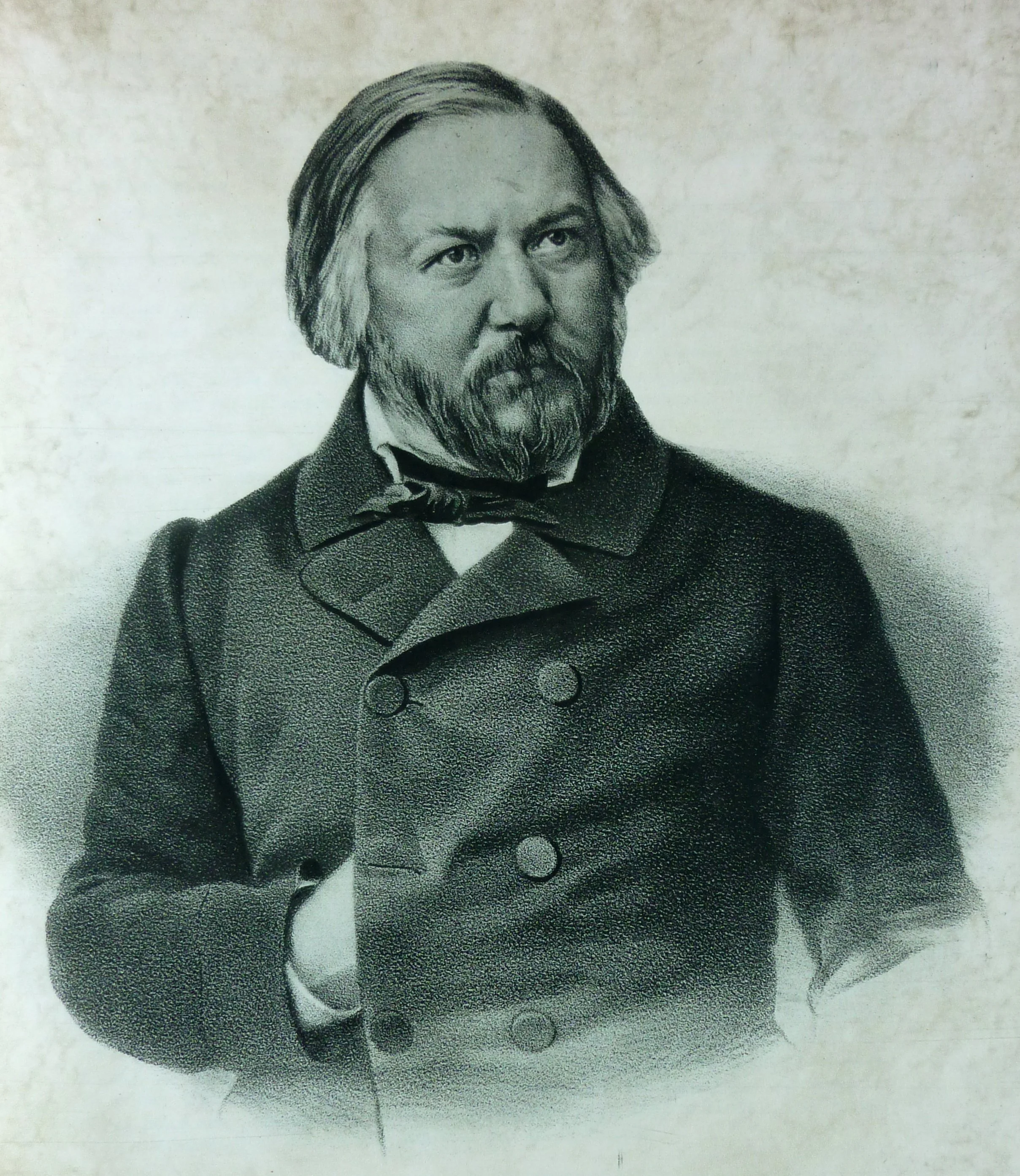
Mikhail Glinka
Overture to “Russlan and Ludmilla”
Composer: Born June 1, 1804. Novospasskoe, Russia; died February 15, 1857, Berlin, Germany.
Work composed: Completed in 1842.
World premiere: December 9, 1842 at the Bolshoi Theater in St. Petersburg.
Instrumentation: 2 flutes, 2 oboes, 2 clarinets, 2 bassoons, contrabassoon, 4 horns, 2 trumpets, 3 trombones, timpani, and strings.
Approximate duration: 5:00.
Background
Glinka, widely viewed as the founding father of Russian musical nationalism, is largely known today through two operas. The first of these, A Life for the Czar (1836), was a success both for its incorporation of elements from Russian folk music, and its contemporary plot, which resonated with burgeoning Russian political nationalism. For his second opera, Glinka turned to an epic poem by Pushkin. Pushkin ‘s Russlan and Ludmilla had secured his reputation when it was published in 1818, and it was widely known in Russian literary circles. The poem is a fairy-tale recreation of ancient Slavic epics: in this case, an extremely complicated version of the “sleeping beauty” legend. Glinka had originally planned to work with the poet in creating a libretto, but Pushkin died in a duel before he could collaborate on the opera. Glinka brought in a team of no fewer than five librettists, who turned Pushkin ‘s already convoluted storyline into an even more complicated series of tableaux. The confusing plot probably contributed to a rather lukewarm response at the premiere performance. Russlan and Ludmilla soon caught on, however, and became a recognized symbol of Russian music: the opera was performed over 300 times in St. Petersburg alone over the next half century, and was widely heard in other Russian cities. European and American audiences were a bit slower to accept the work (it was not performed in the US until 1942), but it is still heard occasionally today.
What You’ll Hear
Though the opera Russlan and Ludmilla is only rarely heard on today ‘s stages, its brilliant little overture has become a staple of the orchestral repertoire. The overture is set in classical sonata form. The opening melodies, accompanied by furious violin lines, are borrowed from the opera ‘s final victory scene. The contrasting theme, played by violas, cellos, and bassoons is a battlefield aria sung by the hero Russlan in the second act. Near the end, the trombones—as usual, relegated to the role of orchestral Bad Guy—play a descending whole-tone scale associated with the evil dwarf Chernomor, but this is soon drowned out in general rejoicing.
Carl Orff
Carmina Burana
Composer: Born July 10, 1895, Munich, Germany; died March 29, 1982, Munich, Germany.
World premiere: June 8, 1937 in a staged production by the Frankfurt Opera, in Frankfurt, Germany.
Instrumentation: Soprano, tenor, and baritone soloists, large chorus, 3 flutes (2 doubling piccolo), 3 oboes (1 doubling English horn), 2 bassoons, contrabassoon, 4 horns, 3 trumpets, 3 trombones, tuba, celeste, 2 pianos, timpani, xylophone, castanets, ratchet, sleigh, bells, triangle, crotales, cymbal, tamtam, chimes, tambourine, bass, drum, glockenspiel, suspended cymbals, and strings.
Approximate duration: 59:00.
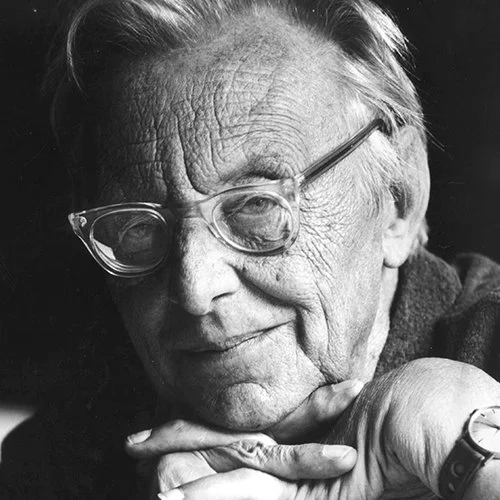
Orff-Zentrum München, CC BY-SA 4.0 <https://creativecommons.org/licenses/by-sa/4.0>, via Wikimedia Commons
Background
During the 12th and 13th centuries, a tremendous body of Latin and vernacular poetry was created by poets collectively known as “goliards.” To group them together under a single name is a bit misleading, however, for the goliards were drawn from every rank of society. The poets include prominent churchmen such as Walter of Châtillon (1135-1176) and Philip, Chancellor of the University of Paris (d.1236), as well as now-nameless monks, students, vagabonds, and minstrels. The poetry is just as variable: there are moralistic and fervidly religious poems, as well as secular lyrics that range from love songs (including worshipful courtly love lyrics, bawdy love songs, and frankly homosexual poetry) to humorous stories and raucous drinking songs. The most famous collection of goliard poetry is the Carmina Burana (literally “Songs of Beuren”), a 13th-century collection of over 200 poems that was compiled at the Benedictine monastery in Benediktbeueren, south of Orff ‘s hometown, Munich. This richly-illuminated manuscript was probably compiled for a wealthy abbot of the monastery. Most of its poems are written in Church Latin, but there are several poems in a Bavarian dialect of medieval German, and a few poems that are partially in French (for example, No. 16 in Orff ‘s setting).
Carl Orff ‘s “secular cantata” on texts from the Carmina Burana is certainly his best-known work. Orff is a familiar name to many music educators—he was the creator of a systematic method of music education for children, and the composer of an important body of Schulwerke, educational music. He enjoyed success as a composer in Germany, but aside from Carmina Burana, few of his concert or stage works are heard in this country.
The part of Orff ‘s biography that is most fraught with controversy is his relationship with the Nazis. Unlike German contemporaries like Schoenberg, Hindemith, and many others who fled the Nazi regime, Orff remained in Germany and thrived as a composer throughout the late 1930s and the war years. The spurious claim that he himself was a Nazi has been raised more than once. The stridently modernist music he had composed in the 1920s and early 1930s, and his close association with many leftists had, in fact, marked him as “dangerous” to the Nazis. Carmina Burana, composed in 1935-36, is the earliest of Orff ‘s acknowledged works—in 1937, he withdrew from publication everything else he had composed up to that time. He also seems to have suppressed any evidence of his previous ties with leftists and Communists. For example, he carefully soft-pedaled his collaboration with playwright Bertholt Brecht in the 1920s and early 1930s. As detailed in 2000 article by Kim Kowalke, Orff had assisted Brecht in several productions, and clearly considered Brecht a mentor. But in 1933, Brecht fled Germany and his works were considered suspicious. Carmina Burana represents a fairly new and simpler musical style that was perfectly in keeping with Nazi cultural policies promoting music that was uplifting and celebrated the spirit of the German Volk. Its texts were also in accord with the idealized view of medieval Germany promulgated by the Nazi Party. Most controversial of all, Orff agreed to compose a set of incidental pieces for a 1939 production of A Midsummer Night ‘s Dream in Frankfurt: music intended by the cultural authorities to replace the standard incidental pieces by the Jewish-born Felix Mendelssohn. (Orff later regretted this decision.) What most of Orff ‘s biographers agree upon is that, if he was guilty of anything during the Nazi regime, it was that he had a good sense of the cultural climate and successfully promoted himself. There is, however, no good evidence that Orff or any of his close associates ever actually became members of the Nazi Party, or subscribed to its ideology.
In speaking about his aesthetic philosophy, Orff remarked that:
I am often asked why I nearly always select old material, fairy tales, and legends for my stage works. I do not see this material as old, but rather as valid. The time element disappears, and only the spiritual element remains. My entire interest is in the expression of these spiritual realities. I write for the theater to convey a spiritual attitude.
This sensitivity to the underlying nature of the texts is clearly apparent in Carmina Burana. Orff ‘s choice of poems—all thoroughly secular—and his ordering of these texts reflects his understanding of the medieval spirit.
What You’ll Hear
The 25 movements of Carmina Burana are divided into three large sections, devoted respectively to springtime, drinking, and love (of all sorts). As a prologue and epilogue, Orff uses a text saluting the goddess Fortune, a symbol of the changeability and fickle nature of luck.
The musical style of Carmina Burana and much of Orff ‘s later work owes a great deal to the neoclassical music of Stravinsky, and echoes of Stravinsky ‘s Symphony of Psalms and Les Noces are clear. Orff ‘s style is harmonically simple, with ostinato rhythmic figures repeated over long static harmonies—the entire choral prologue, for example, is set above an unchanging D in the bass. The orchestration is simple, yet colorful: Orff shows a preference for percussive effects that highlight the accents of the text and his own rhythmic figures. Melodic figures are short and frequently repeated, with very little development. There are also moments of pure Romanticism, however, particularly in the baritone ‘s solo lines. The melodic material used in Carmina Burana is, without exception, Orff ‘s own: he did not use any of the relatively few extant melodies preserved with goliard poetry. His original settings of these 700-year-old lyrics are imbued with both freshness and mystery.
The texts are arranged into three large sections: I. Spring, II. In the Tavern, and III. The Court of Love, and each of these sections is further divided. The first two texts, serving as a prelude to Section I, deal with the most potent symbol of medieval life: the Wheel of Fortune. In countless manuscript illuminations, including a prominent page in the original Carmina Burana manuscript, the wheel is shown being manipulated by a capricious Lady Fortune, who raises and lowers the kings, churchmen, and peasants who cling to it. Section I, Spring, reflects an idealized and mythological view of Nature and Springtime. Spring was an important medieval metaphor—both for resurrection and for youth—but here the enjoyment of the season is purely sensuous. In a subsection, titled On the Green (Nos. 6-10), the outdoor spirit is directed towards thoughts of love and dancing. This subsection contains the only purely orchestral music in Carmina Burana: an instrumental Tanz that opens the section, and a Reie (round-dance) inserted before the chorus Swaz hie gat umbe. The four numbers set in the tavern give four different perspectives of medieval merrymaking: drunken musings, feasting (sung from the perspective of the “feastee,” a roasted swan!), a satire of a drunken clergyman (who invokes the spurious St. Decius, patron saint of gamblers), and finally the drunken and entirely democratic free-for-all of In taberna quando sumus. The third and longest section, “Court of Love,” reflects the twofold conception of love common in medieval thought. There is both the lofty ideal of courtly love—chaste longing for an unattainable lady heard in Dies, nox et omnia—and openly erotic love in Si puer cum puellula. In most of the texts, these two threads are cunningly woven together. This section ends with Blanchefleur and Helen (No. 24), praising Venus in the same terms often reserved for addresses to the Virgin Mary. A repeat of the opening chorus, O Fortuna, serves as a postlude. In returning, Orff neatly encircles Carmina Burana within Fortune ‘s Wheel.
Program notes ©2026 J. Michael Allsen

Digital Program: Scheherazade & Márquez’s Fandango
February 13 & 14, 2026 at 7:30 pm
Modesto Symphony Orchestra
Scheherazade & Márquez’s Fandango
Friday, November 14, 2025; 7:30 pm
Saturday, November 15, 2025; 7:30 pm
Join Mobile MSO!
Text “PROGRAM” to (209) 780-0424
to receive a link to the concert program & text message updates prior to this performance!
By texting to this number, you may receive messages that pertain to the Modesto Symphony Orchestra and its performances. msg&data rates may apply. Reply HELP for help, STOP to cancel.
About this Performance

Program Notes: Scheherazade & Márquez’s Fandango
Notes about:
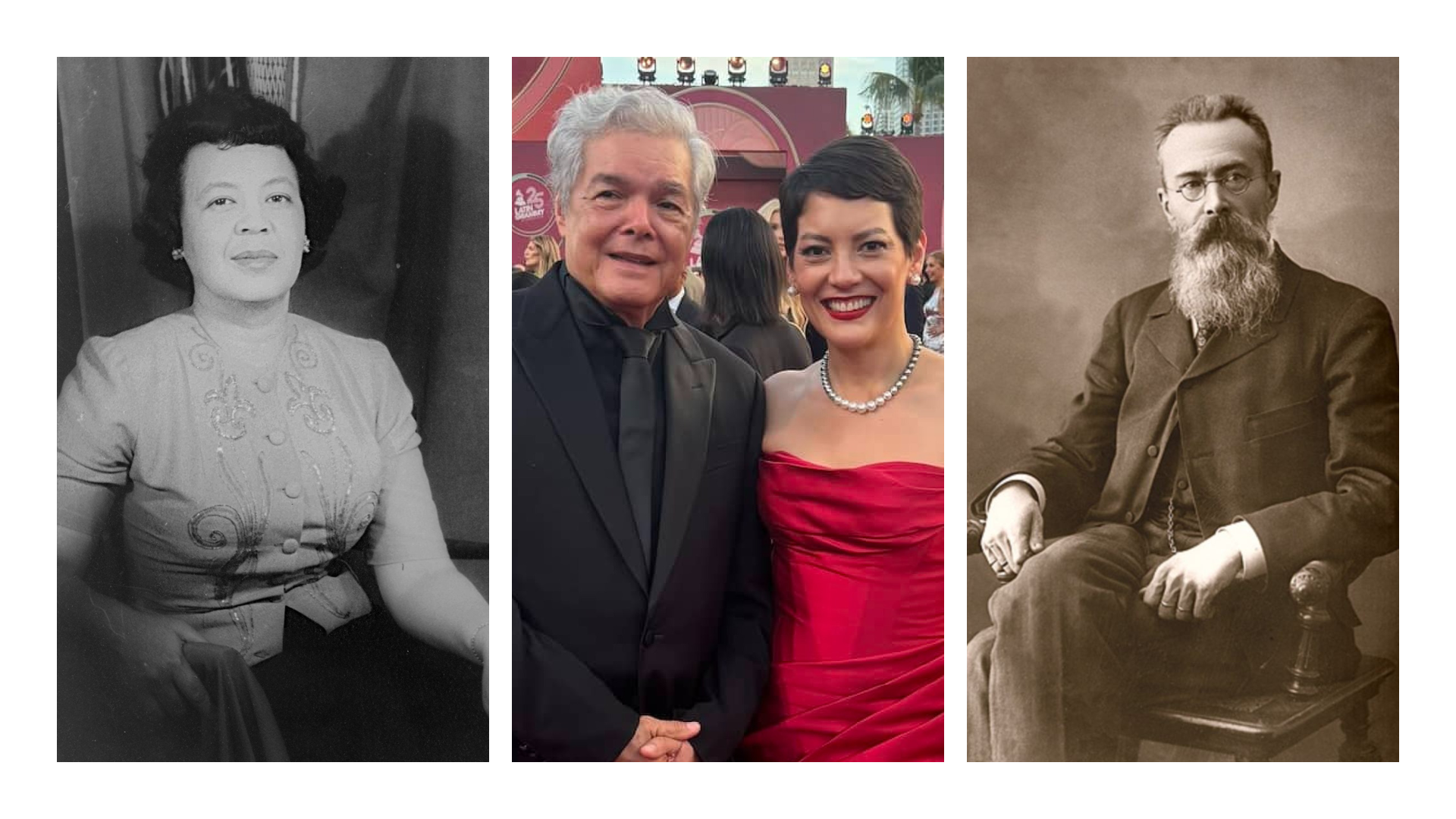
Margaret Bonds: Selections from The Montgomery Variations
Arturo Márquez: Fandango
Nikolai Rimsky-Korsakov: Scheherazade
Program Notes for February 13 & 14, 2026
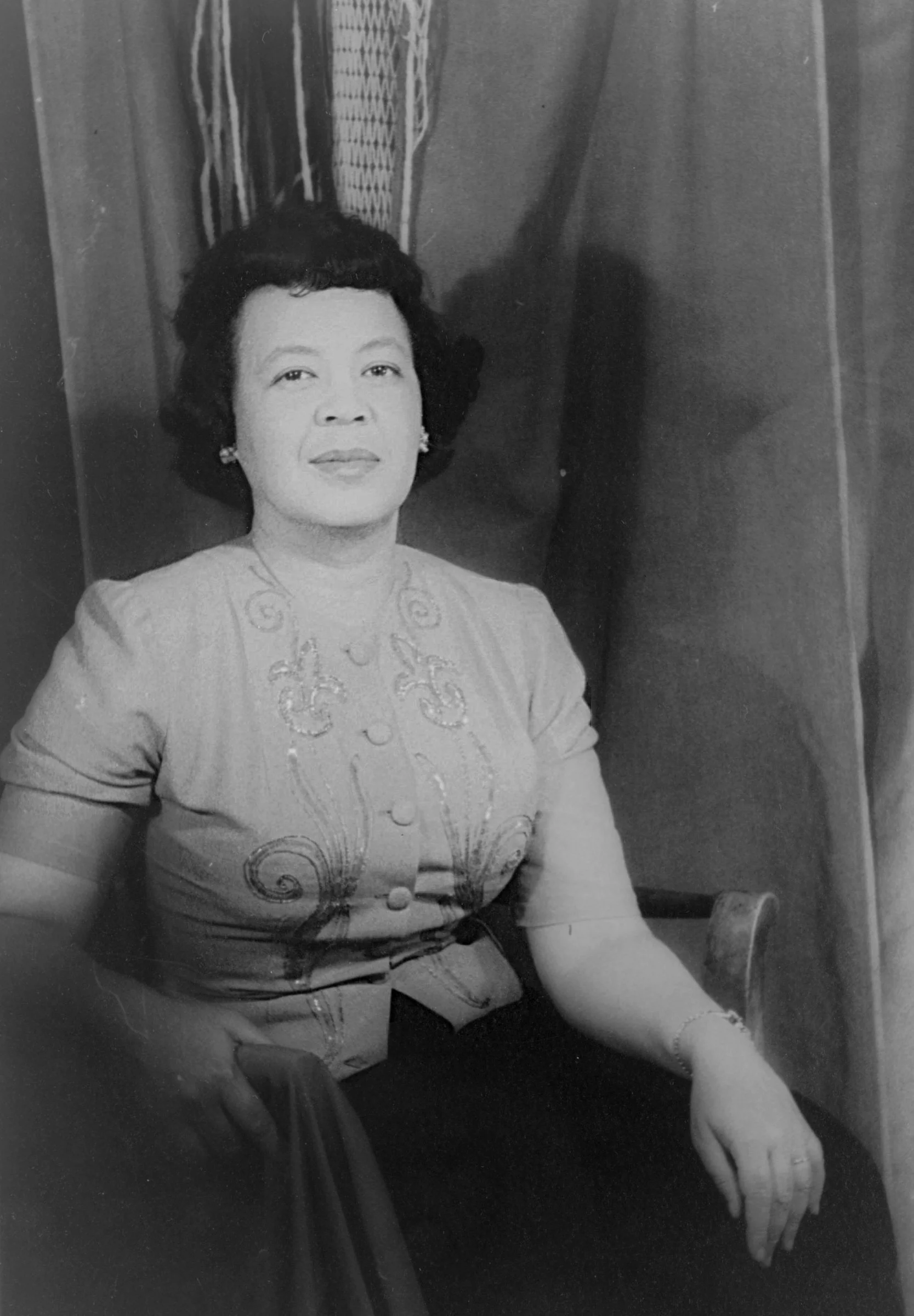
Margaret Bonds
The Montgomery Variations
Composer: Born March 3, 1913, Chicago, Illinois; died April 26, 1972, Los Angeles, California.
Composed: 1963-1964.
Premiere: Though there are some indications that it may have boon performed in 1967, the definitive world premiere was on December 6, 2018, by the University of Connecticut Symphony Orchestra. The Montgomery Variations was finally published in 2020.
Instrumentation: 3 flutes (1 doubling piccolo and alto flute), 2 oboes, 2 bassoons, contrabassoon, 4 horns, 3 trumpets, 3 trombones, tuba, timpani, triangle, cymbals, wood block, tambourine, large drum, harp, and strings
Duration: 15:00.
Background
Composer and pianist Margaret Bonds was born in Chicago, into a family prominent in the African American community. After her father, a well-respected physician, and mother divorced, she grew up in her mother’s house, surrounded by music...and by many of the leading Black intellectual figures and musicians of the day. In the 1920s and 1930s, there was a Chicago Renaissance in parallel to the well-known Harlem Renaissance, and the home of Margaret’s mother, Estelle Bonds, became a gathering-spot for prominent writers, artists, and musicians. Among the longterm houseguests was composer Florence Price, with whom Bonds later studied composition. She entered Northwestern University at age 16, and though she earned Bachelor’s and Master’s degrees there, she found the environment to be racist and hostile. According to Bonds, what saved her was encountering the poem The Negro Speaks of Rivers by Langston Hughes (1902-1967):
Because in that poem he tells how great the black man is. And if I had any misgivings, which I would have to have—here you are in a setup where the restaurants won’t serve you and you’re going to college, you’re sacrificing, trying to get through school—and I know that poem helped save me.
Bonds later struck up a close friendship with Hughes, and set several of his works to music, including a Christmas cantata, The Ballad of the Brown King (1960). While still at Northwestern, Bonds’s composition Sea Ghost won a national prize, and in 1933, she performed as a piano soloist with the Chicago Symphony Orchestra (the first Black soloist in the orchestra’s history). In 1939, she moved to New York City, where she would spend most of her career. Bonds studied piano and composition at the Julliard School, but was also obliged to earn a living, later recalling: “no job was too lousy; I played all sorts of gigs, wrote ensembles, played rehearsal music, and did any chief cook and bottle washer job just so I could be honest and do what I wanted.” What she wanted to do, clearly, was to make music, and over the next three decades she was successful as a composer, but also as a performer, promoter, educator, community leader, and advocate for Black music. The death of Langston Hughes in 1967 seems to have been an emotional turning-point for Bonds, and she moved to Los Angeles in 1968 to work as an educator. She died there in 1972, just a few weeks after the successful premiere of her Credo by the Los Angeles Philharmonic.
Montgomery, Alabama was one of the epicenters of the civil rights movement of the 1950s and 1960s. One of the defining events was the Montgomery bus boycott of 1955-56, sparked by activist Rosa Parks refusing to give up her seat to a white rider on a segregated Montgomery bus. This marked one of the first great victories of the movement, ending in the official desegregation of Montgomery’s buses. One of the leaders of the boycott was the pastor of Montgomery’s Dexter Avenue Baptist Church, Martin Luther King Jr. In 1957, King (to whom Bonds would later dedicate The Montgomery Variations) and other church leaders created the Southern Christian Leadership Conference (SCLC), which would become a major force in the nonviolent civil rights struggle.
In 1963, Bonds was on a concert tour to Montgomery and the surrounding area and was deeply inspired by King and the movement. She began work on The Montgomery Variations, one of her very few purely orchestral pieces almost immediately finishing after the dark day of September 15. She completed the orchestration in 1964. A noted scholar of African-American music, Tammy Kernodle, describes The Montgomery Variations as follows:
The thematic narrative of the work follows the chronology of 1955 to 1963, which correlates with the initiation of the Montgomery bus boycott, the rise of Dr. King, and the initiation of nonviolent direct-action campaigns throughout the South. Bonds ends the narrative framework with one of the seminal events of the Movement—the bombing of the 16th Street Baptist Church in Birmingham, Alabama, on September 15, 1963, which killed four little girls, and its aftermath of grief. Coming only two weeks following Dr. King’s iconic “I Have a Dream” speech at the March on Washington for Jobs and Freedom, the bombing signified the start of a period of overt violence that pervaded the movement during the late 1960s and early 1970s.
What You’ll Hear
The Montgomery Variations is in seven movements, four of which are played here. Black spirituals have been a touchstone for many African-American composers throughout the 20th and 21st centuries, and the primary musical theme, heard throughout, is the spiritual, I Want Jesus To Walk With Me.
Bonds describes the action in the opening movement, I. The Decision: “Under the leadership of Martin Luther King, Jr., and SCLC, Negroes in Montgomery decided to boycott the bus company and to fight for their rights as citizens.” After a dramatic pair of drum rolls, the spiritual theme is laid out by the brasses. The music of this brief introduction conveys a clear sense of resolve throughout. II. Prayer Meeting is much more hushed and fervent, throughout, climaxing in a subdued brass passage and a bluesy trombone solo. Describing III: March, Bonds wrote: “The Spirit of the Nazarene marching with them, the Negroes of Montgomery walked to their work rather than be segregated on the buses. The entire world, symbolically with them, marches.” This is quietly defiant music beginning with a solo bassoon above an insistent string rhythm, that swells inexorably at the end as ever more marchers join in. About the final movement, VII. Benediction, Bonds wrote: “A benign God, Father and Mother to all people, pours forth Love to His children—the good and the bad alike.” This final section starts quietly, almost wistfully, with a series of woodwind solos, eventually growing to a grand transformation of the spiritual theme, and a quiet prayerful ending.
Arturo Márquez
Fandango
Composer: Born December 20, 1950, Álamos, Mexico.
Work composed: 2020. Commissioned for Anne Akiko Myers.
World premiere: In Los Angeles, on August 24, 2021, by violinist Anne Akiko Myers, with the Los Angeles, Philharmonic, led by Gustavo Dudamel.
Instrumentation: solo violin, piccolo, 2 flutes, 2 oboes, 2 clarinets, 2 bassoons, 4 horns, bass, trombone, tuba, timpani, snare drum, cymbals, bass drum, claves, cajon, güiro, harp, and strings.
Estimated duration: 30:00.
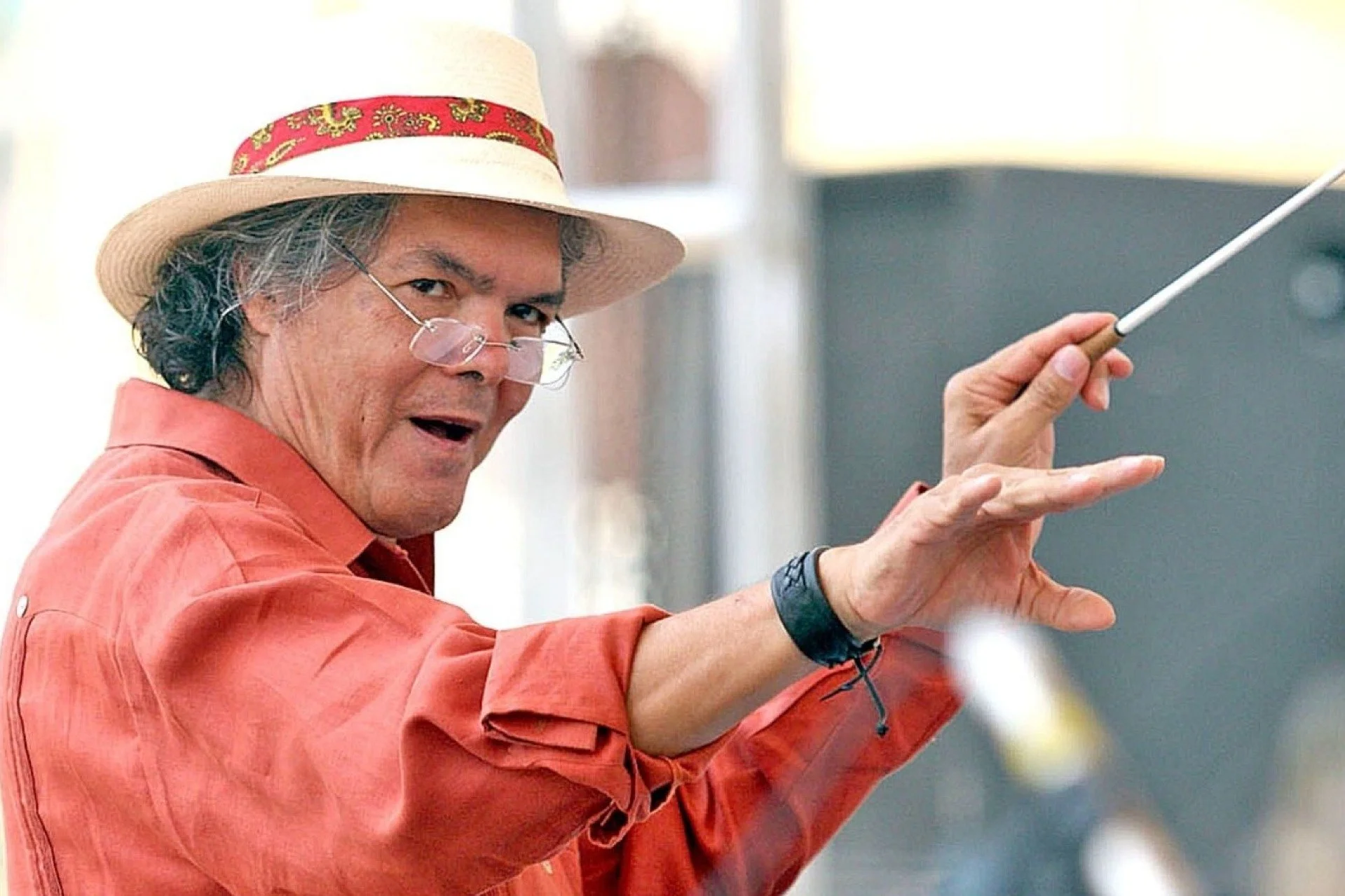
Background
Arturo Márquez, one of Mexico’s most successful contemporary composers, was born in the state of Sonora. When he was 12 years old, his family moved to a suburb of Los Angeles, where he studied piano, violin, and trombone. Márquez later recalled that “My adolescence was spent listening to Javier Solis [the famous Mexican singer/actor], sounds of mariachi, the Beatles, Doors, Carlos Santana and Chopin.” He later studied at the Conservatory of Music of Mexico, with the great French composer Jacques Castérède in Paris, and at the California Institute of the Arts. He is on the faculty of the National Autonomous University in Mexico City. Márquez frequently uses Mexican and other Latin folk influences in his works, and his best-known series of works are the Danzónes he began composing in the 1990s for orchestra and other ensembles.
Márquez notes regarding the Fandango that:
The Fandango is known worldwide as a popular Spanish dance and specifically, as one of the fundamental parts (Palos) of Flamenco. Since its appearance in the 18th century, various composers such as S. de Murcia, D. Scarlatti, L. Bocherini, Padre Soler, and W. A. Mozart, among others, have included the Fandango in concert music. What is little known in the world is that immediately upon its appearance in Spain, the Fandango moved to the Americas where it acquired personalities according to the land that adopted and cultivated it. Today, we can still find it in countries such as Ecuador, Colombia and Mexico—in the latter specifically in the state of Veracruz and in the Huasteca area, part of seven states in eastern Mexico. Here the Fandango acquires a tinge different from the Spanish genre; for centuries, it has been part of a special festival for musicians, singers, poets and dancers. Everyone gathers around a wooden platform to stamp their feet, sing and improvise ten-line stanzas bout the occasion.
In 2018 I received an email from violinist Anne Akiko Meyers, a wonderful musician, where she proposed to me the possibility of writing a work for violin and orchestra that had to do with Mexican music. The proposal interested and fascinated me from that very moment, not only because of Maestra Meyers’s emotional aesthetic proposal but also because of my admiration for her musicality, virtuosity and, above all, for her courage in proposing a concerto so out of the ordinary. I had already tried, unsuccessfully, to compose a violin concerto some 20 years earlier with ideas that were based on the Mexican Fandango. I had known this music since I was a child, listening to it in the cinema, on the radio and hearing to my father (Arturo Márquez Sr.), a mariachi violinist, play Huastecos and mariachi music. Also, since the 1990s I have been admiring the Fandango in various parts of Mexico. I would like to mention that the violin was my first instrument when I was 14 years old (1965). Remarkably, I studied it in La Puente, California in Los Angeles County where this work will be premiered with the wonderful Los Angeles Philharmonic under the direction of Gustavo Dudamel, whom I admire very much. This is a beautiful coincidence, as I have no doubt that the Fandango was danced in California in the 18th and 19th centuries.
What You’ll Hear
Márquez provides the following description of the work itself:
Fandango for violin and orchestra is formally a concerto in three movements:
Folia Tropical
Plegaria (Prayer) (Chaconne)
Fandanguito
The first movement, Folia Tropical, is in the sonata form of a traditional classical concerto: introduction, exposition with its two themes, bridge, development and recapitulation. The introduction and the two themes share the same motif in a totally different way. Emotionally, the introduction is a call to the remote history of the Fandango; the first theme and the bridge, this one totally rhythmic, are based on the Caribbean “Clave” rhythm, and the second is eminently expressive, almost like a romantic Bolero. Folias are ancient dances that come from Portugal and Spain. However, also the root and meaning of this word also takes us to the French word “folie”—madness.
The second movement Plegaria pays tribute to the Huapango mariachi together with the Spanish Fandango, both in its rhythmic and emotional parts. It should be noted that one of the Palos del Flamenco Andaluz is known as the Malagueña and Mexico also has a Huapango honoring the Andalusian city of Malaga. I do not use traditional themes but there is a healthy attempt to unite both worlds; that is why this movement is the fruit of an imaginary marriage between the Huapango mariachi and Pablo Sarasate, Manuel de Falla and Issac Albeniz, three of the Spanish composers whom I most love and admire. It is also a freely treated Chaconne. Perhaps a few people know that the Chaconne as well as the Zarabanda were two dances forbidden by the Spanish Inquisition in the late 16th and early 17th centuries, long before they became part of European Baroque music. Moreover, the first written descriptions of these dances place them in colonial Mexico of these centuries.
The third movement, Fandanguito, is a tribute to the famous Malaga huasteco. The music of this region is played by violin, jarana huasteca (small rhythm guitar) and huapanguera (low guitar with 5 courses of strings). This ensemble accompanies the songs and recited or sung improvisation. The huasteco violin is one of the instruments with the most virtuosity in all of America. Its technique has certain features similar to Baroque music but with great rhythmic vitality and a rich original variety in bow strokes. Every huasteco violinist must have a personal version of this playing technique, if he wants to have and maintain prestige. This third movement is a totally free elaboration of the Fandanguito huasteco, but it maintains many of its rhythmic characteristics. It demands great virtuosity from the soloist. It is music that I have kept in my heart for decades.
I think that for every composer it is a real challenge to compose new works from old forms, especially when this repertoire is part of the fundamental structure of classical music. On the other hand, composing in this during the 2020 pandemic was not easy due to the huge human suffering. Undoubtedly my experience with this work during this period has been intense and highly emotional but I must mention that I have preserved my seven capital principles: tonality, modality, melody, rhythm, imaginary folk tradition, harmony and orchestral color.
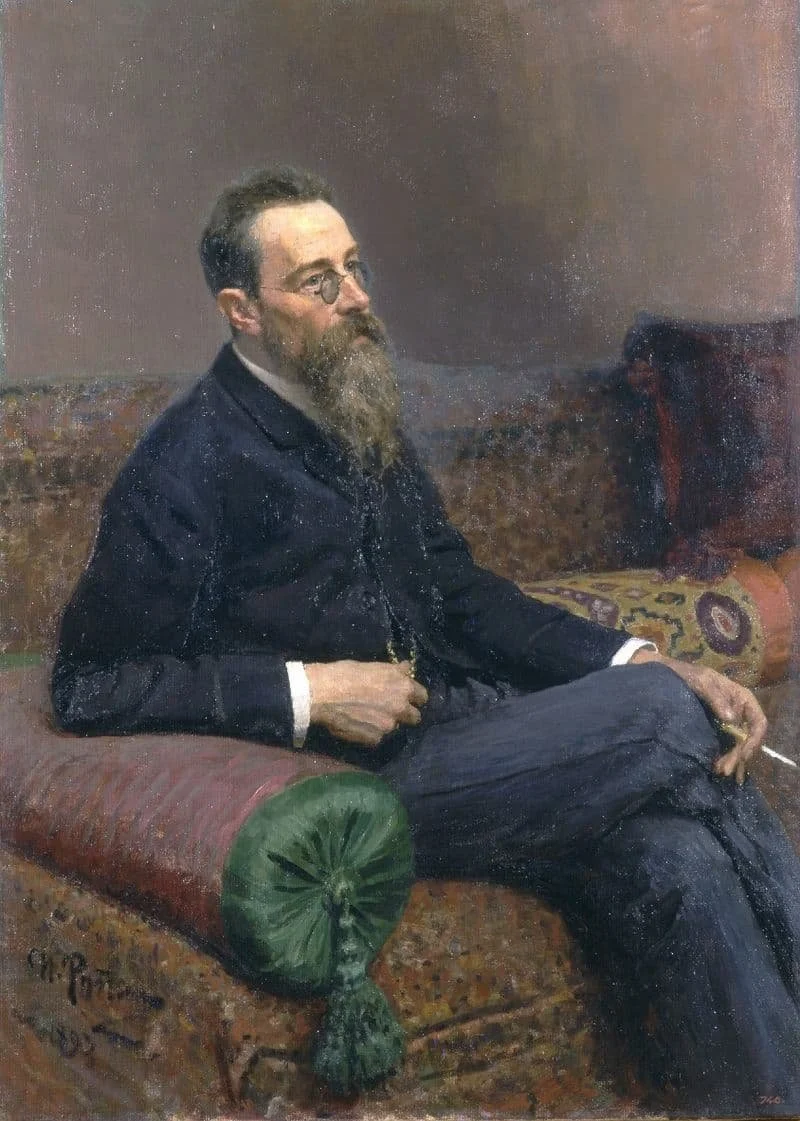
Nicolai Rimsky-Korsakov (1844-1908)
Scheherazade: Symphonic Suite, Op. 35
Composer: Born March 18, 1844, in Tivkin, Russia; died June 21, 1908, in Liubensk, Russia.
Work composed: Rimsky-Korsakov completed Scheherazade in 1888, during his summer break from his duties at the St. Petersburg Conservatory.
World premiere: The composer conducted its premiere in St. Petersburg, on November 9, 1888.
Instrumentation: 3 flutes (2 doubling piccolo), 2 oboes, English horn, 2 clarinets, 2 bassoons, 4 horns, 2 trumpets, 3 trombones, tuba, timpani, cymbals, suspended cymbal, snare drum, triangle, tambourine, tamtam, harp, and strings.
Approximate duration: 40:00.
Background
The Thousand and One Nights is a collection of Arabic and Egyptian stories dating from as early as the 10th century. The framing story is that the Sultan Shahryar, convinced of the infidelity of all women, puts a series of wives to death until the Princess Scheherazade distracts him by telling him one fantastic tale after another, one each night for 1001 nights. He eventually lays aside his murderous plan. There are many versions of The Thousand and One Nights, but most of the stories, including the voyages of Sinbad and the story of Ali Baba and the Forty Thieves, were collected together by the 15th century. Some, including, the story of Aladdin, were added even later. 19th-century readers were fascinated by exotic settings and fairy-tales and the “Arabian Nights” fills this bill nicely—stories of love, humor, bravery, and magic. To be sure, most European, American, and Russian readers knew the collection only through carefully-edited translations that avoided the more sexually explicit bits, and accentuated the fairy-tale aspects. (An exception was the unexpurgated English translation published by Francis Burton in 1885—a highly controversial book in its time.) The tales served as the basis for innumerable works of art, literature, dance and music. The most powerful musical treatment is certainly Rimsky-Korsakov’s symphonic suite Scheherazade, which was composed in 1888.
Rimsky-Korsakov, the great Russian nationalist and leading teacher at the St. Petersburg Conservatory, first conceived of a work on stories from The Thousand and One Nights in the winter of 1887 as he was at work on his completion of Borodin’s Prince Igor. He finished Scheherazade in 1888, during his summer break from his teaching duties—at roughly the same time as he completed his equally famous Russian Easter Overture. In the earliest version, Rimsky-Korsakov gave descriptive titles to Scheherazade’s four sections: I. The Sea and Sinbad’s Ship, II. The Tale of the Kalendar Prince, III. The Young Prince and the Young Princess, and IV. Festival at Bagdad. The Sea. The Ship Goes to Pieces on a Rock Surmounted by the Bronze Statue of a Warrior. Conclusion. He was uncomfortable with a strictly programmatic interpretation, however, and before publishing the work, considered replacing the titles of the four movements with less picturesque designations: Prelude, Adagio, Ballade, and Finale. Rimsky-Korsakov did away with movement-titles altogether in the published version of the suite, but by this time the original descriptive titles were well known. He actually managed to have it both ways, however, as he later wrote in his autobiography:
In composing Scheherazade, I meant these hints to direct but slightly the hearer’s fancy on the path which my own fancy had traveled, and to leave more minute and particular conceptions as to the will and mood of each movement. All that I desired was that, if the listener liked my piece as symphonic music, he should carry away the impression that it is beyond doubt an oriental narrative of some varied fairy-tale wonders, and not merely four pieces played one after the other, and composed on the basis of themes common to all of the four movements. Why then, if this is the case, does my suite bear the specific title of Scheherazade? Because this name and the title The Arabian Nights connote in everybody’s mind the East and fairy-tale marvels—besides, certain details of the musical exposition hint at the fact that all of these are various tales of some one person (which happens to be Scheherazade) entertaining therewith her stern husband.
What You’ll Hear
Rimsky-Korsakov was an acknowledged master of scoring music for orchestra (his Principles of Orchestration is still one of the standard works on the subject)—for him, “orchestration is part of the very soul of the work.” Scheherazade may well be his masterwork in this regard—are few other works that make such effective use of orchestral color. The Sea and Sinbad’s Ship begins with a pair of themes that recur in all four movements, an angry theme from the trombones (the voice of the Sultan?) and a seductive violin solo, which despite all of Rimsky-Korsakov’s circumlocutions, must represent Princess Scheherazade herself. The body of the movement is distinctly aquatic, with a broad 6/4 theme that suggests the rolling of the waves.
There are several princes in the collection who disguise themselves as kalendars—roving holy men. After the violin announces a new story, Rimsky-Korsakov’s The Tale of the Kalendar Prince begins with a series of quiet, oriental-sounding woodwind solos, expanding into a dance for the full string section. A bold pronouncement from the solo trombone suddenly changes the mood, and the movement ends in what sounds like an extended battle scene, alternating Scheherazade’s theme with more warlike music. The next movement is a gentle contrast: The Young Prince and the Young Princess is a nostalgic interlude, with a rich dance melody (derived from Scheherazade’s theme) above a shimmering background, and a hint of oriental percussion. Scheherazade herself appears briefly, before the movement ends with a lush coda.
The finale begins with boisterous and sometimes frantic festival music that alternates with Scheherazade’s sinuous theme. The broad Sinbad music of the first movement returns in the trombones, but now the woodwinds provide the howling of hurricane winds, until a moment of crashing disaster. The movement ends with a quiet epilogue for solo violin, as Scheherazade concludes the tale.
Program notes ©2026 J. Michael Allsen

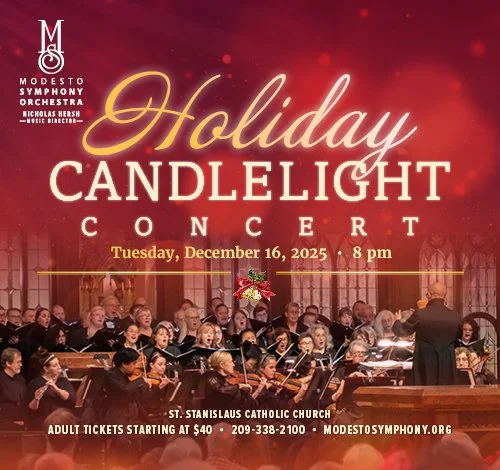
Holiday Candlelight Concert
Tuesday, December 16, 2025 at 8 pm
Modesto Symphony Orchestra
Holiday Candlelight Concert
Tuesday, December 16, 2025
Doors Open at 7 pm
Concert Starts at 8 pm
St. Stanislaus Catholic Church
1200 Maze Boulevard, Modesto
Join Mobile MSO!
Text “PROGRAM” to (209) 780-0424
to receive a link to the concert program & text message updates prior to this performance!
By texting to this number, you may receive messages that pertain to the Modesto Symphony Orchestra and its performances. msg&data rates may apply. Reply HELP for help, STOP to cancel.
About this Performance


Digital Program: Holiday Pops!
December 5 & 6 2025
Modesto Symphony Orchestra
Holiday Pops!
Friday, December 5, 2025; 7:30 pm
Saturday, December 6, 2025; 2:00 pm

Join Mobile MSO!
Text “PROGRAM” to (209) 780-0424
to receive a link to the concert program & text message updates prior to this performance!
By texting to this number, you may receive messages that pertain to the Modesto Symphony Orchestra and its performances. msg&data rates may apply. Reply HELP for help, STOP to cancel.
About this Performance


Digital Program: Beethoven & Klebanov
November 14 & 15, 2025 at 7:30 pm
Modesto Symphony Orchestra
Beethoven & Klebanov
Friday, November 14, 2025; 7:30 pm
Saturday, November 15, 2025; 7:30 pm
Join Mobile MSO!
Text “PROGRAM” to (209) 780-0424
to receive a link to the concert program & text message updates prior to this performance!
By texting to this number, you may receive messages that pertain to the Modesto Symphony Orchestra and its performances. msg&data rates may apply. Reply HELP for help, STOP to cancel.
About this Performance

Program Notes: Beethoven & Klebanov
Notes about:
Beethoven: Violin Concerto in D Major
Klebanov: Symphony No. 1
Williams: A Prayer for Peace
Program Notes for November 14 & 15, 2025
Beethoven & Klebanov

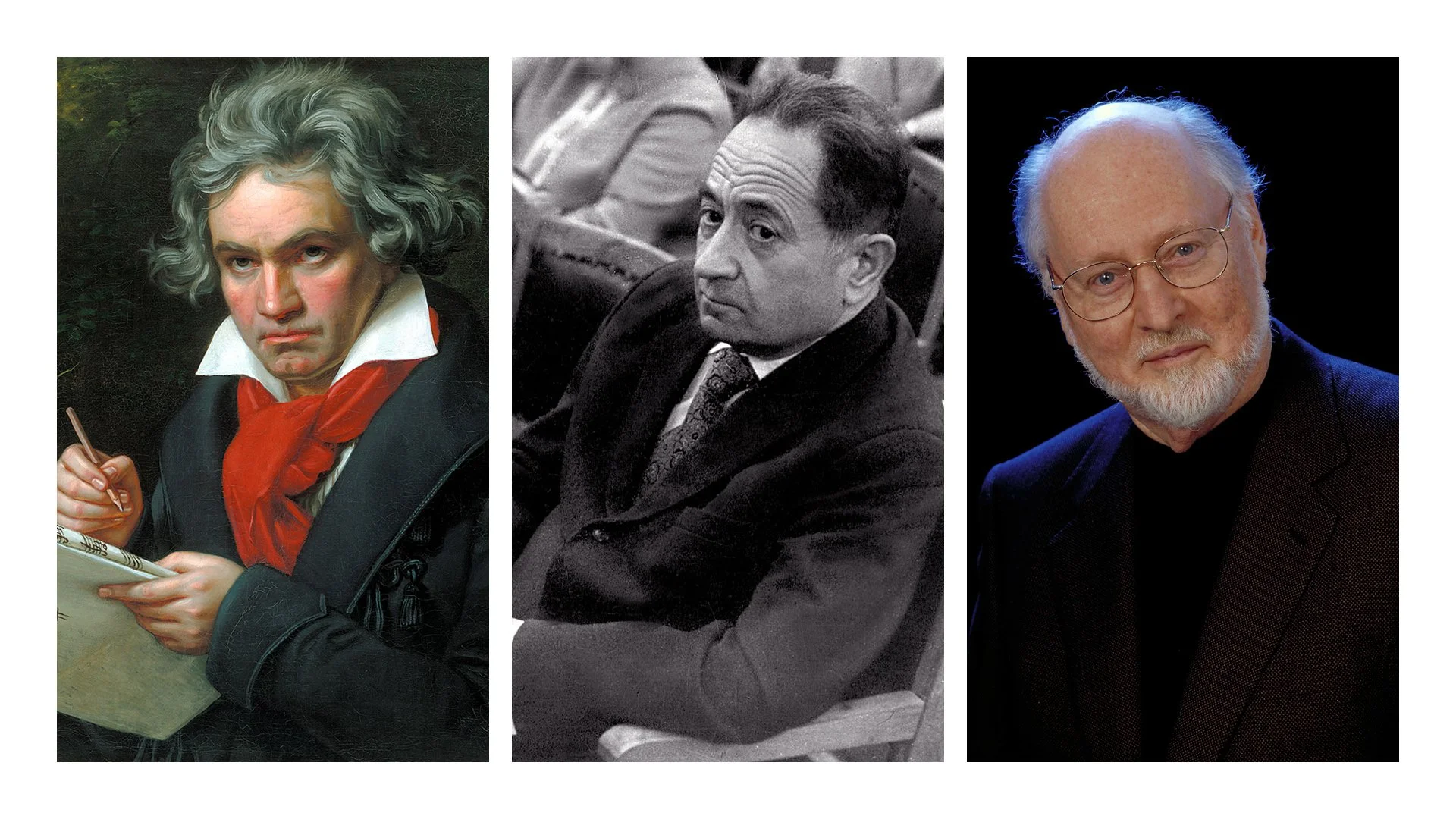
Ludwig Van Beethoven (1770-1827)
Concerto in D Major for Violin and Orchestra, Op. 61
Beethoven composed this concerto in 1806, and it was first performed on December 23, 1806, at the Theater-an-der-Wien in Vienna, with Franz Clement as soloist.
Duration: 39 minutes
Background
Beethoven completed his only concerto for violin in 1806, during a burst of creativity that also produced the three “Razumovsky” quartets, the fourth symphony, the “Appassionata” sonata, and the fourth piano concerto. The concerto was written for Franz Clement, a violinist whose association with Beethoven went back to 1794, when Clement was a 14-year-old Wunderkind. The title page dedicates the work to Clement, while noting his “clemency” towards the composer. (Beethoven’s puns were even worse than the normal lot.) The concerto was premiered at a concert that apparently included some pretty flamboyant showmanship. According to a review of the concert in the Wiener Theater-Zeitung, Clement inserted one of his own violin sonatas between the first and second movements of the concerto—a sonata played on one string, with the violin held upside-down! Perhaps because of this blatant showstopper, reviews of the performance were generally disdainful. (The fact that Clement was reportedly sight-reading the concerto may not have helped, either...)
This was not a work that caught on quickly, and it certainly did not follow the fashion of the time. By 1806, audiences were beginning to demand works that displayed astonishing feats of speed and agility: flash over substance. Even as late as 1855, when a young Joseph Joachim played Beethoven’s concerto for the virtuoso Louis Spohr, Spohr’s reaction was: “This is all very nice, but now I’d like you to play a real violin work.” Beethoven’s concerto is more symphonic in scope, focusing on careful development of his broad and profound themes, and brilliant orchestration, instead of empty virtuosity. The concerto finally came into its own in the later 19th century, as players like Joachim confronted the special challenges of Beethoven’s work: thoughtfulness and musical expression.
What You’ll Hear
The first movement (Allegro ma non troppo) begins with five unaccompanied timpani notes that usher in the woodwinds. The orchestral introduction presents the themes that will provide the raw material for the solo violin’s more extensive treatment. At the close of the introduction, the orchestra hushes and allows the opening violin line to burst forth—a flourish that spans the entire range of the instrument. The body of this movement is based on a set of beautiful hymn-like themes. The violin’s expansion of these melodies is never merely flashy decoration, but instead careful development. A lengthy cadenza leads to a final statement of the second main theme.
The Larghetto is certainly one of the most intriguing and expressive of Beethoven’s compositions. Its form has variously been described as “theme and variations,” “semi-variations” and even “strophic.” In a classic essay, Beethoven scholar Owen Jander suggested that the deliberate ambiguities in the overall theme and variations form of the Larghetto reflect a burgeoning Romanticism—that the slow movement is a musical rendering of a poetic dialogue. In fact, the movement proceeds in a gentle but passionate dialogue between the soloist and the orchestra, culminating in a dramatic cadenza that leads directly into the final movement.
The last movement is more typical of Classical style—a spirited 6/8 Rondo. Here, it seems, Beethoven made a slight bow to audience demand and gave the violinist some flashier technical passages. There is a brief minor-key episode at the center, but otherwise the mood of this concerto is exuberant throughout. The concerto closes with an extended coda that gives the violinist one more chance at some soloistic fireworks.
Program Notes ©2025 J. Michael Allsen
Dmitri Klebanov
Symphony No. 1 “In Memoriam Babi Yar”

Dmytro Lvovich Klebanov was born in 1907 to a working-class Jewish family in Kharkiv, Ukraine. A musical prodigy, he enrolled at the Kharkiv Conservatory at age 16, where he would later return as professor of composition (and where he would meet his wife Nina, the conservatory director). His burgeoning reputation as a composer in the Soviet Union in the 1930s speaks to his talent and tenacity at a time when Stalin’s government was targeting and disappearing Ukrainian artists and intellectuals—a period known as the Executed Renaissance.
When the Nazi army invaded Ukraine in 1941, Klebanov and his family, along with thousands of other Soviet Jews, were relocated to Uzbekistan; they returned home in 1944 to find horrific destruction and loss of life, including Klebanov’s brother, a soldier in the Soviet army. With this backdrop, Klebanov immediately began work on his First Symphony, dedicating it to the victims of the September 1941 massacre of nearly 34,000 Jews at the hands of the occupying Nazis at the Babi Yar ravine in Kyiv (some 17 years later, Babi Yar would also be the theme of Dmitri Shostakovich’s Symphony No. 13).
Klebanov’s Symphony No. 1 premiered in 1946 in Kharkiv, and its public success moved it to be submitted for the 1949 Stalin Prize. The score’s arrival in Moscow, however, led not to commendation, but condemnation: Stalin’s cultural authorities connected the symphony’s dedication to its Jewish melodic influences, and claimed that by using such sources, Klebanov had “unpatriotically” and “insolently” dedicated it specifically to Jewish, rather than Soviet, victims of the massacre.
Any additional performances of the symphony were canceled, and Klebanov found himself blacklisted. His wife’s stature as conservatory director likely saved him from deportation or worse, but a ruling by the Union of Soviet Composers stripped him of his titles as Head of the Kharkiv Conservatory’s Composition Department and as Chair of the local Composers’ Union. Klebanov was allowed to remain at his post in Kharkiv, but was he effectively shunned and isolated. He would not hear his symphony again before his death in 1987.
From its first notes, the symphony invokes a curious specter: Beethoven’s famous Ninth Symphony, with its descending fourths and fifths over a rustling bed of tremolando strings. At the same time, this first theme conjures an image of falling, as if into the Babi Yar ravine itself. A gentler, nostalgic second theme is introduced in contrast, based on the opposite motion of a rising fourth.
The Scherzo second movement opens with mysterious celli and basses and soon becomes a rousing, brutal dance in 3/4 time. A romantic arioso theme for the violins opens the middle Trio section, which slowly builds to a raucous climax and settles back to a softer sequence of yearning woodwind solos.
The third movement, a funeral march, recalls the nostalgic second theme of the first movement with its rising fourth, now a dark and somber solo for the bass clarinet. An animated, ferocious middle section summons the first theme of the first movement once again, before a final, grand statement of the Funeral March theme collapses into the most evocative moment of the symphony: the March theme, sung wordlessly by a contralto vocal solo. The ghost of a synagogue cantor, perhaps—a victim of the massacre.
The Finale erupts in a bombastic paraphrase of the Presto Finale of Beethoven’s Ninth, leading to a series of cello-bass recitatives interspersed with recollections of previous movements of the symphony—again, the same architecture as Beethoven’s finale. Klebanov’s recitatives have a singspeak-like intonation that seems to evoke a Hebrew recitation: the Mourner’s Kaddish prayer, perhaps. An English horn solo emulates a shofar, the traditional ram’s horn blown during the Jewish High Holidays.
Klebanov then builds a tightly-constructed fugue, its boisterous subject built around the intervals of the recitative motif, which leads to a reprise of the opening Presto. What follows can only be described as a satire of the Ode to Joy itself, introduced with soft celli and basses in the same way Beethoven presents his famous melody. Klebanov’s mock-Ode theme undergoes a series of dramatic variations before ending up a militaristic trumpet duet punctuated by orchestral cannon fire. The recitative returns, now in an aggressive, off-kilter ostinato, which leads finally to the coda: the return of the first movement “Babi Yar” theme, now rising victoriously as an exuberant brass fanfare, in conversation with the Hebraic recitative in the low voices below.
It does not strain the imagination to interpret these references to Beethoven as an act of defiance against Ukraine’s erstwhile invaders, holding up a mirror to the Germanic music the Nazis once touted as proof of their own superiority while juxtaposing it against Jewish-inspired melodies. “Despite their atrocities against our people,” the subtext might read, “we are still here.”
Program Notes written by Music Director Nicholas Hersh
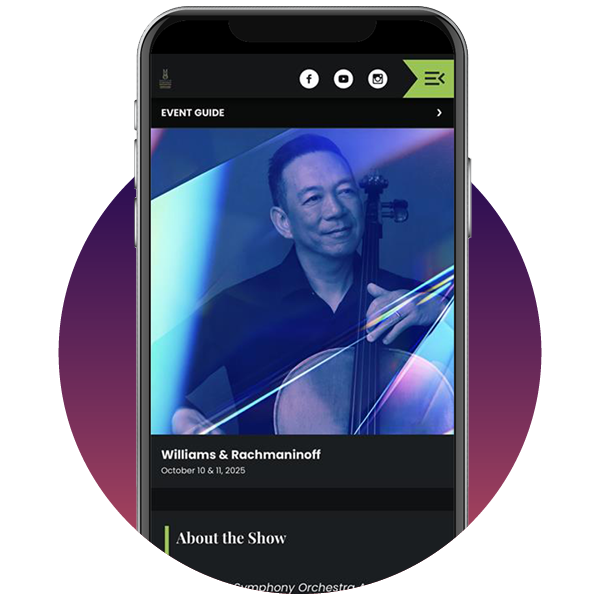
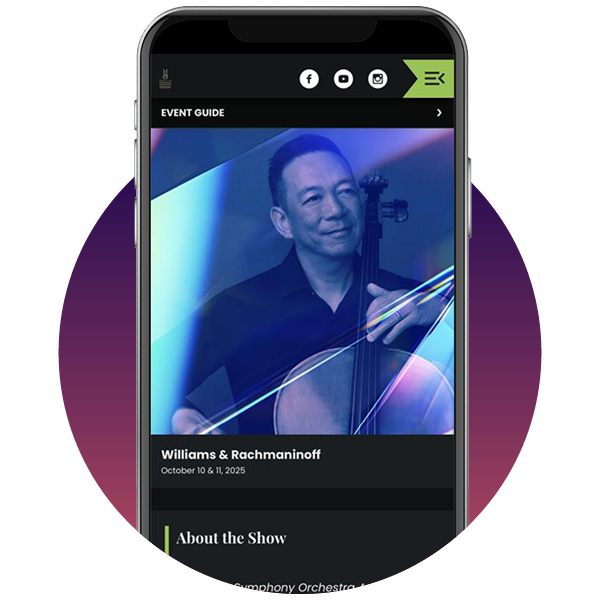
Digital Program: Williams & Rachmaninoff
October 10 & 11, 2025 at 7:30 pm
Modesto Symphony Orchestra
Williams & Rachmaninoff
Friday, October 10, 2025; 7:30 pm
Saturday, October 11, 2025; 7:30 pm
Join Mobile MSO!
Text “PROGRAM” to (209) 780-0424
to receive a link to the concert program & text message updates prior to this performance!
By texting to this number, you may receive messages that pertain to the Modesto Symphony Orchestra and its performances. msg&data rates may apply. Reply HELP for help, STOP to cancel.
About this Performance

Program Notes: Williams & Rachmaninoff
Notes about:
Williams: Concerto for Cello & Orchestra
Rachmaninoff: Symphony No. 2 in E Minor
Program Notes for October 10 & 11, 2025
Williams & Rachmaninoff
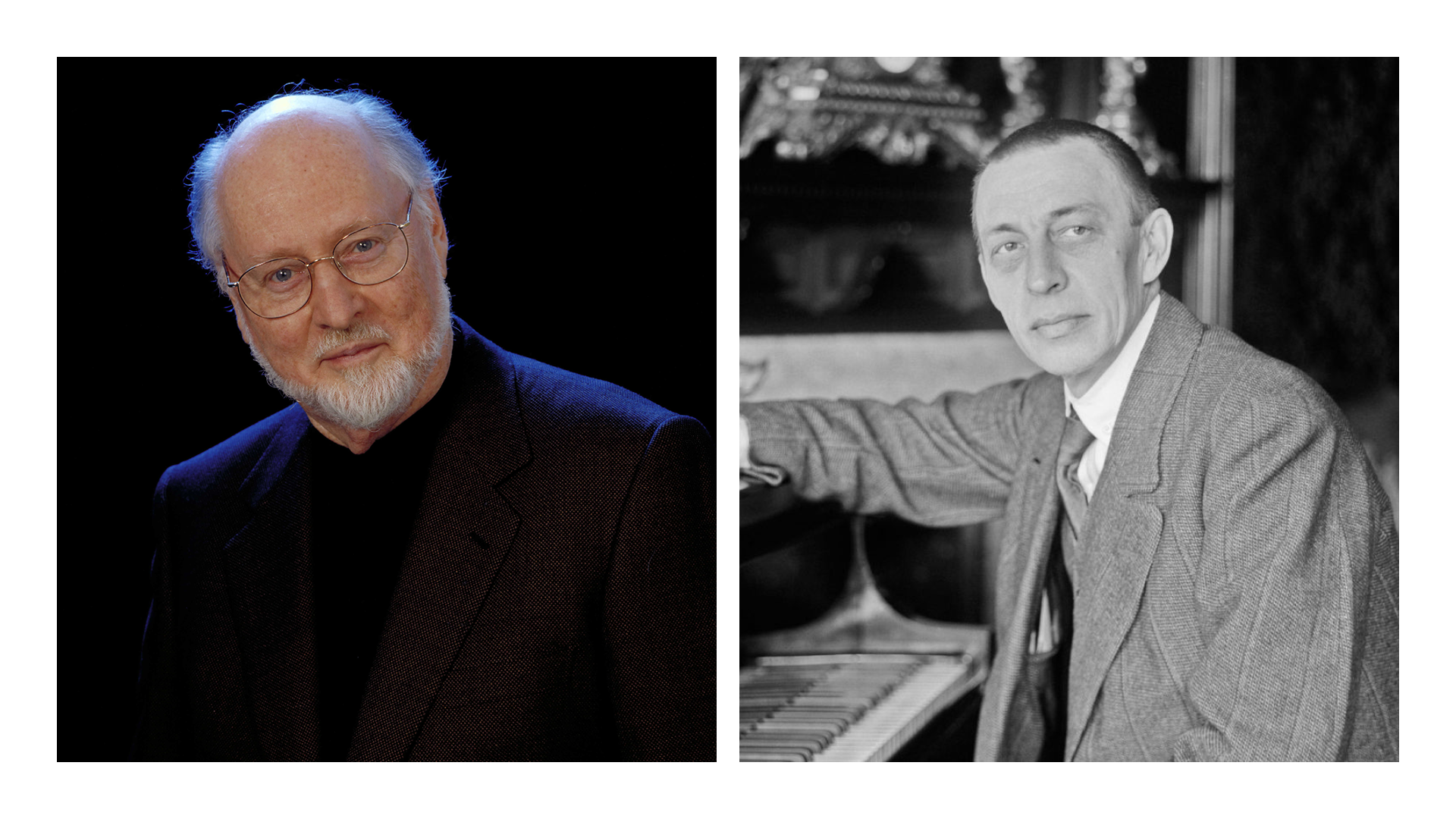
John Williams
Concerto for Cello and Orchestra
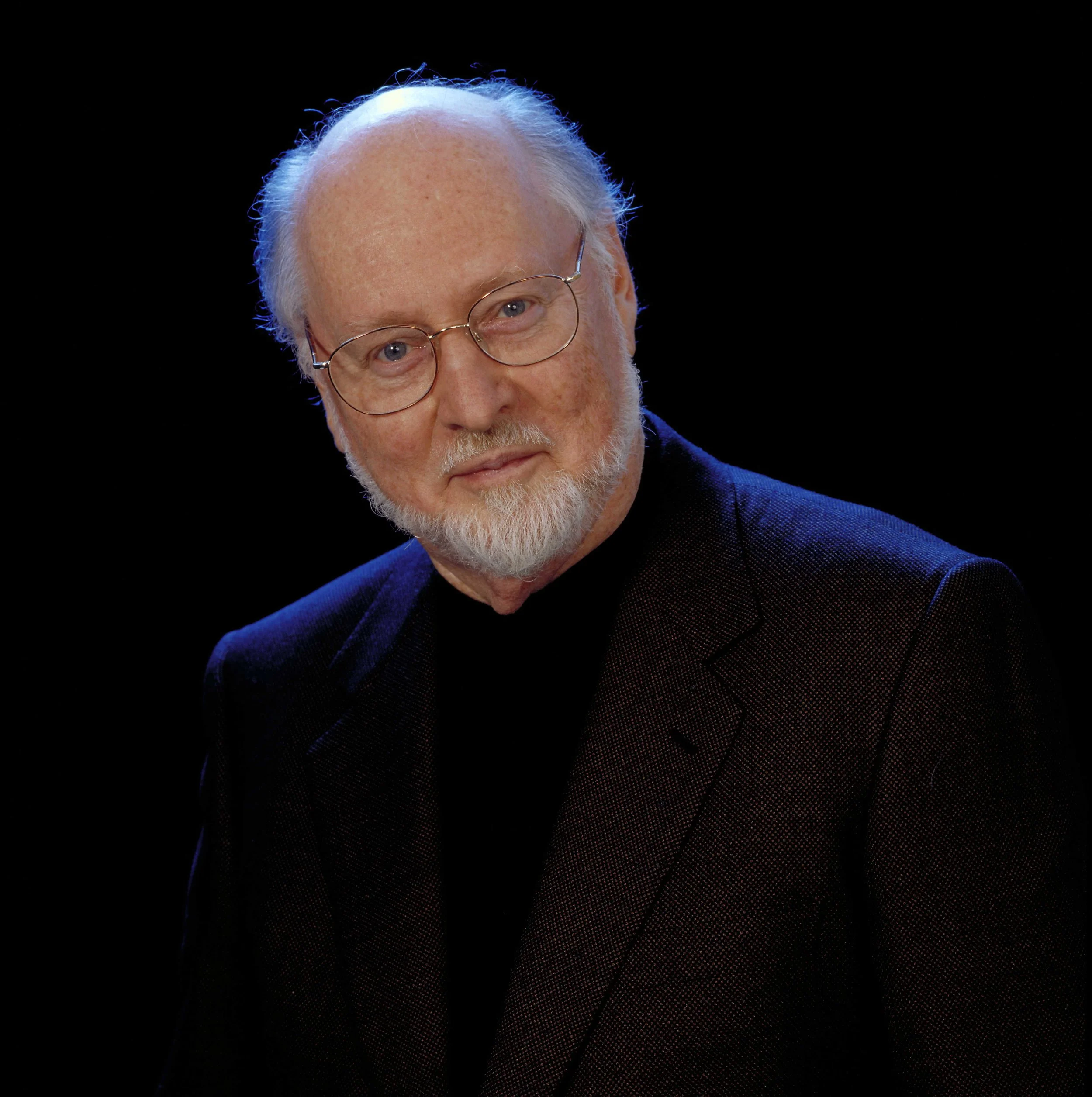
Composer: born February 8, 1932, Flushing, Queens, NY
Work composed: 1993-94. Commissioned by Seiji Ozawa and the Boston Symphony and composed for cellist Yo-Yo Ma.
World premiere: Williams led Yo-Yo Ma and the Boston Symphony on July 7, 1994, at Tanglewood, to mark the opening of Seiji Ozawa Hall.
Instrumentation: solo cello, 3 flutes (1 doubling piccolo), 2 oboes, English horn, 3 clarinets (1 doubling bass clarinet), 2 bassoons, contrabassoon, 4 horns, 3 trumpets, 4 trombones, timpani, bass drum, chimes, glockenspiel, marimba, mark tree, small triangle, suspended cymbal, tam-tam, triangle, tuned drums, vibraphone, harp, piano/celesta, and strings
Estimated duration: 30 minutes
“Music is our oxygen.”
Composer John Williams is synonymous with movie music. He became a household name with the Academy Award-winning score he wrote in 1977 for Star Wars, and he has defined the symphonic Hollywood sound ever since. In addition to the Star Wars films, Williams composed the music for Jaws, the Raiders of the Lost Ark films, Superman, Close Encounters of the Third Kind, E.T., the Jurassic Park films, Schindler’s List, the Harry Potter series, and many other films.
Williams has also composed a considerable body of concert works, including six concertos. Like his scores, Williams’ concert music also features his masterful orchestration and dramatic flourishes, and his concertos are designed to showcase the unique qualities of both the solo instrument and the soloist.
Williams and Ma have been good friends and collaborators for decades. “Given the broad technical and expressive arsenal available in Yo-Yo’s work, planning the concerto was a joy,” Williams writes. “I decided to have four fairly extensive movements that would offer as much variety and contrast as possible but that could be played continuously and without interruption.
“The Theme and Cadenza, after an opening salvo of brass, immediately casts the cello in a kind of hero’s role, making it the unquestioned center of attention. It’s a movement that attempts to put the cello on display in the time-honored sense of ‘concerto,’ and as the hero’s theme is developed, it ‘morphs’ into a cadenza in which I tried to create an opportunity for exploration of the theme that would be both ruminative and virtuosic.
“The second movement I call Blues.… In my mind, and without any conscious prodding on my part, the ghosts of Ellington and Strayhorn seemed to waft through the atmosphere. Invited or not, this was for me very welcome company. I set up clusters in piano and percussion that form a frame within which the cello unveils its misty quasi-improvisations.
“The Scherzo is about speed, deftness, and sleight of hand. The music romps along in triple time over a treacherous landscape where athletic exchanges are periodically and suddenly interrupted by a series of fermatas, as the orchestra and cello try to dominate and outdo each other. There’s a short tutti where it appears that the orchestra might prevail, but the cello outwits and outlasts it.
“In thinking about the finale of the concerto, I was always aware of the fact that Yo-Yo’s ability to ‘connect’ personally and even privately with every individual in his audience is perhaps the greatest of his abundant gifts. I therefore tried in Song, the concerto’s finale, to create long lyrical lines that would give the cello the opportunity to address the audience in the manner of a clear and direct soliloquy.
“Whatever virtues the concerto may have can never surpass, for me, the experience of knowing and working with Yo-Yo Ma. Happily, and with complete justice, the world loves and reveres this man, as do I, and working with him is always a joyous journey to be treasured.”
Sergei Rachmaninoff
Symphony No. 2 in E minor, Op. 27

Composer: born April 1, 1873, Oneg, Russia; died March 28, 1943, Beverly Hills, CA
Work composed: 1906-07. Rachmaninoff dedicated it to his composing teacher, Sergei Taneyev
World premiere: February 7, 1908, in St. Petersburg, with Rachmaninoff conducting
Instrumentation: 3 flutes (1 doubling piccolo), 3 oboes (1 doubling English horn), 2 clarinets, bass clarinet, 2 bassoons, 4 horns, 3 trumpets, 3 trombones, tuba, timpani, bass drum, cymbals, glockenspiel, snare drum, and strings
Estimated duration: 43 minutes
Artists of all types have a love-hate relationship with critics: they need the exposure criticism brings to their work, but often scorn the critiques themselves. Other artists take criticism too much to heart and let it affect them to a debilitating degree, which was the case with Sergei Rachmaninoff. After the premiere of Rachmaninoff’s first symphony, he was so savaged by critics that he did not dare compose a note for three years. Eventually Rachmaninoff consulted a doctor, Nicolai Dahl, who used hypnotism to bolster Rachmaninoff’s flagging confidence. Rachmaninoff’s Second Piano Concerto was dedicated to Dahl, and it vindicated Rachmaninoff as a composer by becoming one of his most popular works.
After the success of the Second Piano Concerto, Rachmaninoff felt ready to tackle another symphony, and in 1906 he began work on his second. The writing was difficult for him, as he reported in a letter to a friend, and the work proceeded slowly. The final version lasted over an hour, although Rachmaninoff later suggested a number of performance cuts that shorten it by as much as 20 minutes; these cuts have become standard when programming this symphony today. Although Rachmaninoff, out of necessity, agreed to the cuts, which amounted to some 300 measures of music, he later confided to conductor Eugene Ormandy, “You don’t know what cuts do to me. It is like cutting a piece out of my heart.” Rachmaninoff might have appreciated the words of one critic, who wrote at the symphony’s premiere, “After listening with unflagging attention to its four movements, one notes with surprise that the hands of the watch have moved sixty-five minutes forward. This may be slightly overlong for the general audience, but how fresh, how beautiful it is!”
The symphony opens with a darkly murmuring theme played by the lower strings, a theme that forms the basis for the remainder of the first movement, as well as much of the rest of the symphony. The violins contrast with a lyrical melody, followed by a plaintive solo for English horn. Throughout this movement, Rachmaninoff uses solo instruments as structural signposts, indicating changes of mood or harmonic foundations.
The horns launch the Scherzo with a bold, energetic theme, and the strings continue with a bouncier, skipping melody. These are contrasted by a series of interludes, one unabashedly romantic, and others feverishly intense. As was his wont in many of his orchestral works, including the Rhapsody on a Theme of Paganini, Rachmaninoff includes the Dies irae melody (Day of Wrath) from the Requiem Mass; it appears here in the coda to the trio.
In the Adagio, Rachmaninoff’s signature romanticism is heard in the violins’ opening melody, which could easily serve as the love song in a cinematic romance. In fact, 1970s pop singer Eric Carmen wrote a hit song based on this theme, “Never Gonna Fall in Love Again.”
For the Finale, Rachmaninoff unleashes a whirlwind of vibrant joy. Buoyant strings recall the Scherzo, but this music is abruptly interrupted by the stark call of muted horns. We then hear snatches of music from previous movements, especially the Scherzo and the Adagio. The strings, playing in the style of the Italian tarantella, are the foundation for this movement, and its energy drives the symphony forward to a triumphant conclusion.
© Elizabeth Schwartz
NOTE: These program notes are published here by the Modesto Symphony Orchestra for its patrons and other interested readers. Any other use is forbidden without specific permission from the author, who may be contacted at www.classicalmusicprogramnotes.com

Picnic at the Pops! The Music of Queen
September 6, 2025
Modesto Symphony Orchestra
Picnic at the Pops!
Windborne’s The Music of Queen
Saturday, September 6, 2025
Grounds Open: 5:00 pm
Concert Starts: 7:30 pm
GALLO Grounds
Program
All selections will be announced from the stage.
There will be one intermission.
About this Performance

Enrich Your Concert Experience