

Program Notes: Carmina Burana
Program Notes for May 8 & 9, 2026

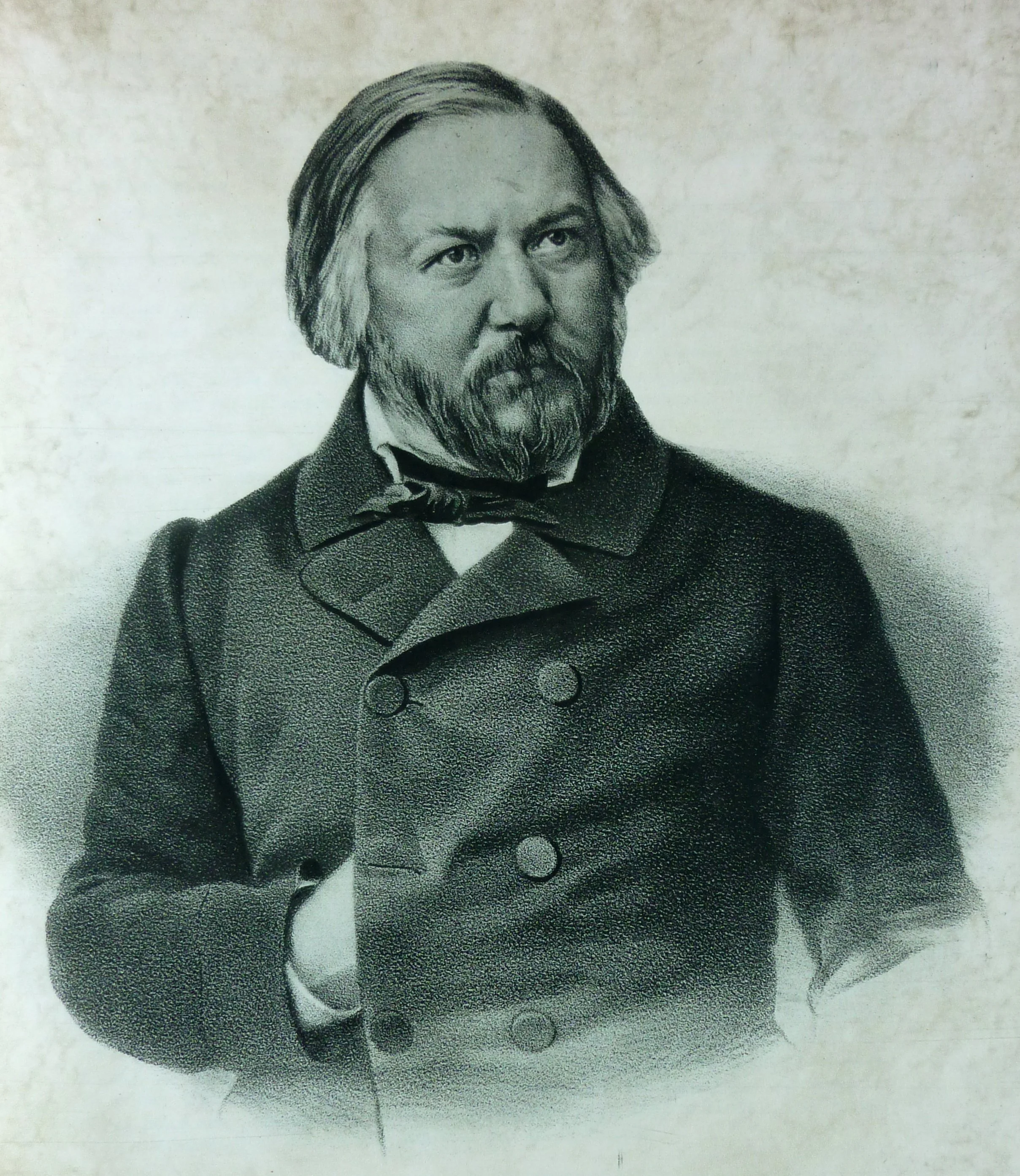
Mikhail Glinka
Overture to “Russlan and Ludmilla”
Composer: Born June 1, 1804. Novospasskoe, Russia; died February 15, 1857, Berlin, Germany.
Work composed: Completed in 1842.
World premiere: December 9, 1842 at the Bolshoi Theater in St. Petersburg.
Instrumentation: 2 flutes, 2 oboes, 2 clarinets, 2 bassoons, contrabassoon, 4 horns, 2 trumpets, 3 trombones, timpani, and strings.
Approximate duration: 5:00.
Background
Glinka, widely viewed as the founding father of Russian musical nationalism, is largely known today through two operas. The first of these, A Life for the Czar (1836), was a success both for its incorporation of elements from Russian folk music, and its contemporary plot, which resonated with burgeoning Russian political nationalism. For his second opera, Glinka turned to an epic poem by Pushkin. Pushkin ‘s Russlan and Ludmilla had secured his reputation when it was published in 1818, and it was widely known in Russian literary circles. The poem is a fairy-tale recreation of ancient Slavic epics: in this case, an extremely complicated version of the “sleeping beauty” legend. Glinka had originally planned to work with the poet in creating a libretto, but Pushkin died in a duel before he could collaborate on the opera. Glinka brought in a team of no fewer than five librettists, who turned Pushkin ‘s already convoluted storyline into an even more complicated series of tableaux. The confusing plot probably contributed to a rather lukewarm response at the premiere performance. Russlan and Ludmilla soon caught on, however, and became a recognized symbol of Russian music: the opera was performed over 300 times in St. Petersburg alone over the next half century, and was widely heard in other Russian cities. European and American audiences were a bit slower to accept the work (it was not performed in the US until 1942), but it is still heard occasionally today.
What You’ll Hear
Though the opera Russlan and Ludmilla is only rarely heard on today ‘s stages, its brilliant little overture has become a staple of the orchestral repertoire. The overture is set in classical sonata form. The opening melodies, accompanied by furious violin lines, are borrowed from the opera ‘s final victory scene. The contrasting theme, played by violas, cellos, and bassoons is a battlefield aria sung by the hero Russlan in the second act. Near the end, the trombones—as usual, relegated to the role of orchestral Bad Guy—play a descending whole-tone scale associated with the evil dwarf Chernomor, but this is soon drowned out in general rejoicing.
Carl Orff
Carmina Burana
Composer: Born July 10, 1895, Munich, Germany; died March 29, 1982, Munich, Germany.
World premiere: June 8, 1937 in a staged production by the Frankfurt Opera, in Frankfurt, Germany.
Instrumentation: Soprano, tenor, and baritone soloists, large chorus, 3 flutes (2 doubling piccolo), 3 oboes (1 doubling English horn), 2 bassoons, contrabassoon, 4 horns, 3 trumpets, 3 trombones, tuba, celeste, 2 pianos, timpani, xylophone, castanets, ratchet, sleigh, bells, triangle, crotales, cymbal, tamtam, chimes, tambourine, bass, drum, glockenspiel, suspended cymbals, and strings.
Approximate duration: 59:00.
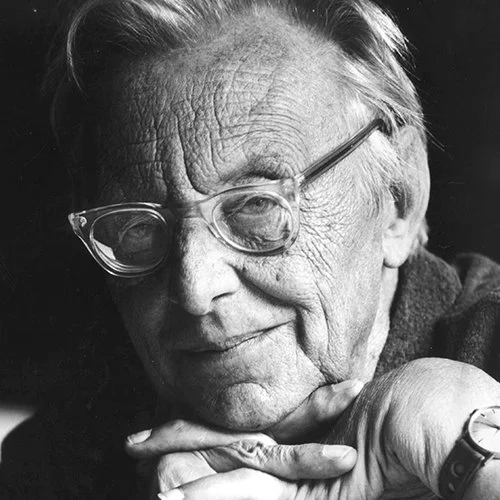
Orff-Zentrum München, CC BY-SA 4.0 <https://creativecommons.org/licenses/by-sa/4.0>, via Wikimedia Commons
Background
During the 12th and 13th centuries, a tremendous body of Latin and vernacular poetry was created by poets collectively known as “goliards.” To group them together under a single name is a bit misleading, however, for the goliards were drawn from every rank of society. The poets include prominent churchmen such as Walter of Châtillon (1135-1176) and Philip, Chancellor of the University of Paris (d.1236), as well as now-nameless monks, students, vagabonds, and minstrels. The poetry is just as variable: there are moralistic and fervidly religious poems, as well as secular lyrics that range from love songs (including worshipful courtly love lyrics, bawdy love songs, and frankly homosexual poetry) to humorous stories and raucous drinking songs. The most famous collection of goliard poetry is the Carmina Burana (literally “Songs of Beuren”), a 13th-century collection of over 200 poems that was compiled at the Benedictine monastery in Benediktbeueren, south of Orff ‘s hometown, Munich. This richly-illuminated manuscript was probably compiled for a wealthy abbot of the monastery. Most of its poems are written in Church Latin, but there are several poems in a Bavarian dialect of medieval German, and a few poems that are partially in French (for example, No. 16 in Orff ‘s setting).
Carl Orff ‘s “secular cantata” on texts from the Carmina Burana is certainly his best-known work. Orff is a familiar name to many music educators—he was the creator of a systematic method of music education for children, and the composer of an important body of Schulwerke, educational music. He enjoyed success as a composer in Germany, but aside from Carmina Burana, few of his concert or stage works are heard in this country.
The part of Orff ‘s biography that is most fraught with controversy is his relationship with the Nazis. Unlike German contemporaries like Schoenberg, Hindemith, and many others who fled the Nazi regime, Orff remained in Germany and thrived as a composer throughout the late 1930s and the war years. The spurious claim that he himself was a Nazi has been raised more than once. The stridently modernist music he had composed in the 1920s and early 1930s, and his close association with many leftists had, in fact, marked him as “dangerous” to the Nazis. Carmina Burana, composed in 1935-36, is the earliest of Orff ‘s acknowledged works—in 1937, he withdrew from publication everything else he had composed up to that time. He also seems to have suppressed any evidence of his previous ties with leftists and Communists. For example, he carefully soft-pedaled his collaboration with playwright Bertholt Brecht in the 1920s and early 1930s. As detailed in 2000 article by Kim Kowalke, Orff had assisted Brecht in several productions, and clearly considered Brecht a mentor. But in 1933, Brecht fled Germany and his works were considered suspicious. Carmina Burana represents a fairly new and simpler musical style that was perfectly in keeping with Nazi cultural policies promoting music that was uplifting and celebrated the spirit of the German Volk. Its texts were also in accord with the idealized view of medieval Germany promulgated by the Nazi Party. Most controversial of all, Orff agreed to compose a set of incidental pieces for a 1939 production of A Midsummer Night ‘s Dream in Frankfurt: music intended by the cultural authorities to replace the standard incidental pieces by the Jewish-born Felix Mendelssohn. (Orff later regretted this decision.) What most of Orff ‘s biographers agree upon is that, if he was guilty of anything during the Nazi regime, it was that he had a good sense of the cultural climate and successfully promoted himself. There is, however, no good evidence that Orff or any of his close associates ever actually became members of the Nazi Party, or subscribed to its ideology.
In speaking about his aesthetic philosophy, Orff remarked that:
I am often asked why I nearly always select old material, fairy tales, and legends for my stage works. I do not see this material as old, but rather as valid. The time element disappears, and only the spiritual element remains. My entire interest is in the expression of these spiritual realities. I write for the theater to convey a spiritual attitude.
This sensitivity to the underlying nature of the texts is clearly apparent in Carmina Burana. Orff ‘s choice of poems—all thoroughly secular—and his ordering of these texts reflects his understanding of the medieval spirit.
What You’ll Hear
The 25 movements of Carmina Burana are divided into three large sections, devoted respectively to springtime, drinking, and love (of all sorts). As a prologue and epilogue, Orff uses a text saluting the goddess Fortune, a symbol of the changeability and fickle nature of luck.
The musical style of Carmina Burana and much of Orff ‘s later work owes a great deal to the neoclassical music of Stravinsky, and echoes of Stravinsky ‘s Symphony of Psalms and Les Noces are clear. Orff ‘s style is harmonically simple, with ostinato rhythmic figures repeated over long static harmonies—the entire choral prologue, for example, is set above an unchanging D in the bass. The orchestration is simple, yet colorful: Orff shows a preference for percussive effects that highlight the accents of the text and his own rhythmic figures. Melodic figures are short and frequently repeated, with very little development. There are also moments of pure Romanticism, however, particularly in the baritone ‘s solo lines. The melodic material used in Carmina Burana is, without exception, Orff ‘s own: he did not use any of the relatively few extant melodies preserved with goliard poetry. His original settings of these 700-year-old lyrics are imbued with both freshness and mystery.
The texts are arranged into three large sections: I. Spring, II. In the Tavern, and III. The Court of Love, and each of these sections is further divided. The first two texts, serving as a prelude to Section I, deal with the most potent symbol of medieval life: the Wheel of Fortune. In countless manuscript illuminations, including a prominent page in the original Carmina Burana manuscript, the wheel is shown being manipulated by a capricious Lady Fortune, who raises and lowers the kings, churchmen, and peasants who cling to it. Section I, Spring, reflects an idealized and mythological view of Nature and Springtime. Spring was an important medieval metaphor—both for resurrection and for youth—but here the enjoyment of the season is purely sensuous. In a subsection, titled On the Green (Nos. 6-10), the outdoor spirit is directed towards thoughts of love and dancing. This subsection contains the only purely orchestral music in Carmina Burana: an instrumental Tanz that opens the section, and a Reie (round-dance) inserted before the chorus Swaz hie gat umbe. The four numbers set in the tavern give four different perspectives of medieval merrymaking: drunken musings, feasting (sung from the perspective of the “feastee,” a roasted swan!), a satire of a drunken clergyman (who invokes the spurious St. Decius, patron saint of gamblers), and finally the drunken and entirely democratic free-for-all of In taberna quando sumus. The third and longest section, “Court of Love,” reflects the twofold conception of love common in medieval thought. There is both the lofty ideal of courtly love—chaste longing for an unattainable lady heard in Dies, nox et omnia—and openly erotic love in Si puer cum puellula. In most of the texts, these two threads are cunningly woven together. This section ends with Blanchefleur and Helen (No. 24), praising Venus in the same terms often reserved for addresses to the Virgin Mary. A repeat of the opening chorus, O Fortuna, serves as a postlude. In returning, Orff neatly encircles Carmina Burana within Fortune ‘s Wheel.
Program notes ©2026 J. Michael Allsen