


Skip to:

Coleman: Seven O’Clock Shout
Composed: 2019.
Premiere: September 24, 2019, by the Philadelphia Orchestra.
Duration: 11:00.
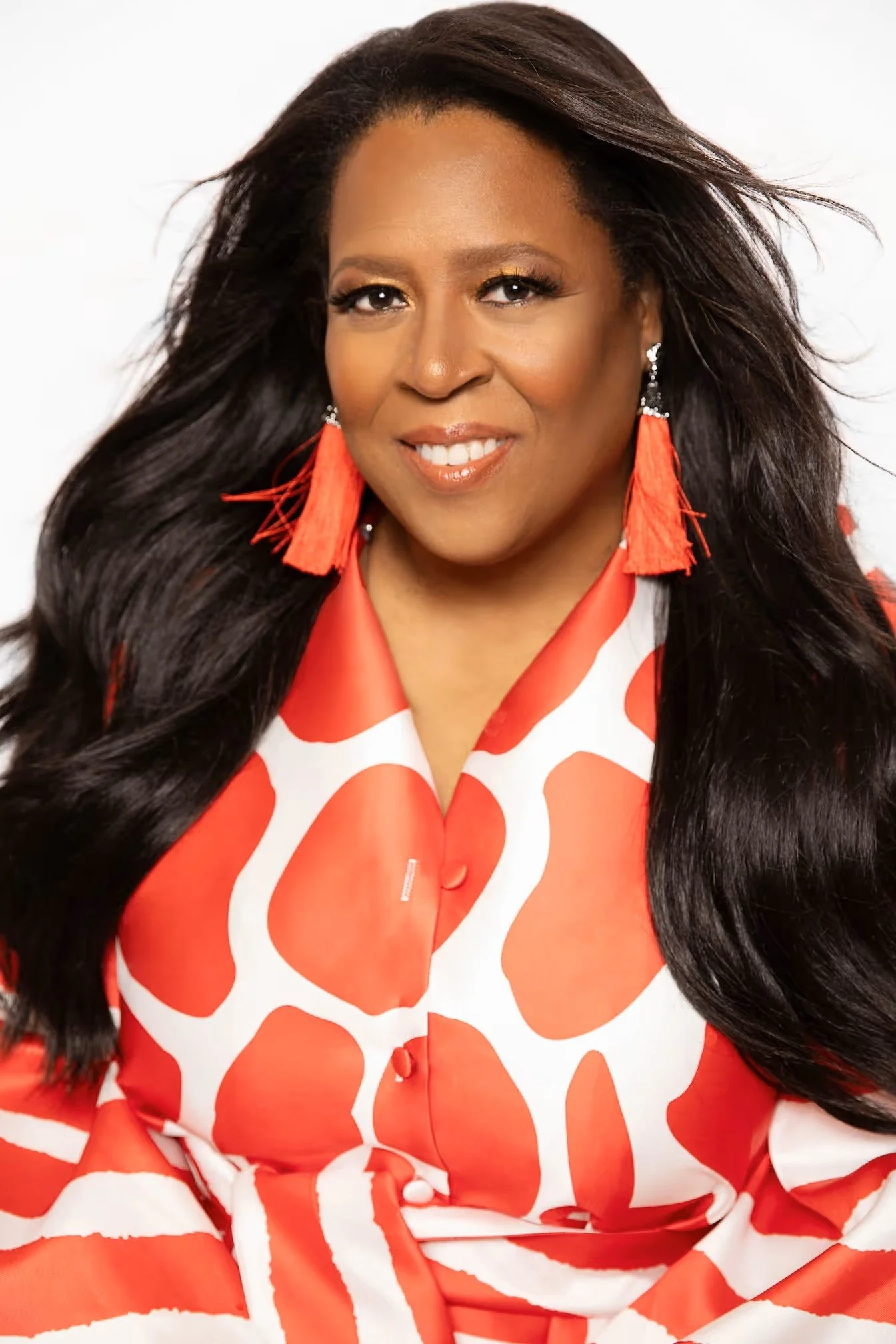
Valerie Coleman
Born: Sept. 3, 1970, Louisville, Kentucky.
Valerie Coleman’s Seven O’Clock Shout was composed during and in reaction to the Covid-19 lockdown—in particular, a practice that started in New York City, her hometown. At 7:00 PM every night New Yorkers would go out on balconies or open windows to cheer for medical workers who were on the front lines and just to create a sense of community: whether by playing music, or singing, or simply banging pots and pans.
-
Composer and flutist Valerie Coleman first came to national prominence as the founder of the Imami Winds, a wind quintet founded in part with the ideal of providing role models to younger African American performers in classical music (Imami is Swahili for “faith.”). She composed several works for this ensemble, including her well-known Umoja, Anthem for Unity, and has attracted several recent commissions, including an orchestral version of Umoja by the Philadelphia Orchestra in 2019. Coleman built what she described as a “personal friendship” with the orchestra, and the Philadelphia Orchestra turned her for a new piece when they put together their first virtual performance in July 2020. (She notes that she had only “about two weeks” to compose the piece!) Her Seven O’Clock Shout was a reaction to one of the bright spots in the dark days of the Covid-19 shutdown: when people in her hometown, New York City, and cities around the country would go to open windows and balconies and cheer for first responders and frontline workers—and create a sense of community for themselves—whether through music or simply making a collective noise.
-
Coleman wrote the following about the work:
Seven O’Clock Shout is an anthem inspired by the tireless frontline workers during the Covid-19 pandemic, and the heartwarming ritual of evening serenades that brings people together amidst isolation to celebrate life and the sacrifices of heroes. The work begins with a distant and solitary solo between two trumpets in fanfare fashion to commemorate the isolation forced upon humankind, and the need to reach out to one another. The fanfare blossoms into a lushly dense landscape of nature, symbolizing both the caregiving acts of nurses and doctors as they try to save lives, while nature is transforming and healing herself during a time of self-isolation.
When a composer has the rare opportunity to create for musicians they have gotten to know, the act of composing becomes an embrace tailored to the personality and capabilities of the musicians with elements of both challenge and appreciation. One such moment is dedicated to humanity and grace, as a clarinet solo written for Ricardo Morales, followed by a flute solo with both Jeffrey Khaner and Patrick Williams in mind, providing a transition into a new upbeat segment. Later, to continue tradition from the first commission the composer received from the orchestra, a piccolo solo dedicated to Erica Peel dances with joy.
It was suggested that a short work for a debut by multi-track recording could account for the ensemble performing together as if they were in the same room. One of the devices used to address this is the usage of ostinato, which is a rhythmic motif that repeats itself to generate forward motion and in this case, groove. The ostinato patterns here are laid down by the bass section, allowing the English horn and strings to float over it, gradually building up to that moment at 7pm, when cheers, claps, clangings of pots and pans, and shouts ring through the air of cities around the world! The trumpets drive an infectious rhythm, layered with a traditional Son clave rhythm, while solo trombone boldly rings out an anthem within a traditional African call and response style. The entire orchestra ‘shouts’ back in response and the entire ensemble rallies into an anthem that embodies the struggles and triumph of humanity. The work ends in a proud anthem moment where we all come together with grateful hearts to acknowledge that we have survived yet another day.”While the Philadelphia Orchestra’s virtual premiere is available on YouTube, the work is now widely (and thankfully!) being performed in a live setting.
Rachmaninoff: Piano Concerto No. 2 in C minor, Op. 18
Composed: 1900-01.
Premiere: October 14, 1901, by the Moscow Philharmonic Society, with the composer at the piano.
Duration: 33:00.

Sergei Rachmaninoff
Born: April 1, 1873, Starya Russa, Russia.
Died: March 28, 1943, Beverly Hills, California.
Rachmaninoff’s second piano concerto is one of the great landmark works of the romantic piano repertoire. It was written after the composer had recovered from a serious bout of depression. This concerto is in three movements:
• A lengthy opening movement in sonata form.
• A sentimental slow movement with a lush main theme..
• A forceful finale.
-
In the years prior to 1900, Rachmaninoff was at the lowest point in his musical career and personal life. His Memoirs describe the crushing self-doubt and apathy that ruled his life after a disastrous premiere performance of his first symphony in St. Petersburg in 1897. He considered giving up composition, and according to the Memoirs “I did nothing and found no pleasure in anything. Half my days were spent lying on a couch and sighing over my ruined life.” Even a highly successful tour to London, where he performed his first piano concerto with the London Philharmonic Orchestra, did not break this prolonged depression. It was not until 1900, when his relatives sent Rachmaninoff to a hypnotist, Dr. Nikolai Dahl, that the depression broke. The composer had promised during his London tour to provide a second piano concerto for a return engagement but had given up the effort. Rachmaninoff described the many sessions with Dr. Dahl where he would “lay half asleep” while the doctor planted suggestions in his mind about his ability to write the concerto. The Concerto No. 2 quickly began to take shape, and the last two movements were ready to be performed at a Moscow charity concert in December of 1900, where the audience was wildly was enthusiastic. His confidence restored, Rachmaninoff completed in quick succession the Op. 17 suite for two pianos and the opening movement of the concerto. When the Piano Concerto No. 2 was published in 1901, it was gratefully dedicated to “Monsieur N. Dahl.”
-
The first movement (Moderato) opens with piano chords that lead into the first theme: a thoroughly Russian melody decorated by piano filigree. After a very broad presentation of this first theme, the piano is left exposed to play the lyrical second theme. The development is mainly concerned with the first theme: it is fragmented among the sections of the orchestra, supporting increasingly flashy writing in the piano. Near the end the end of the development, the piano introduces a march-like figure that carries into the somewhat varied recapitulation.
After a chromatic introduction, the piano begins the second movement (Adagio sostenuto) with a triplets that continue beneath the presentation of the main theme by the clarinet. (This melody will also be recognizable to those of us of a certain age as a rather syrupy 1970s pop song.) The soloist and orchestra then trade roles: the piano plays the theme, while the woodwinds and strings pick up the triplet figure. A central section develops the theme slightly, and a piano flourish leads into a much more agitated version by strings and woodwinds. The piano inserts a brilliant cadenza, and the theme makes one final appearance.
The final movement (Allegro scherzando) begins with extremely sparse orchestration. However instruments are added in quick succession, and brief fortissimo passage establishes the key. The piano begins with a cadenza, followed by the re-entrance of the woodwinds and strings in close rhythmic interplay with the solo line. The first theme is introduced by the soloist and immediately developed. A short passage by the soloist leads into the second theme, which is played by violas and oboe. The development section introduces new material—a dotted figure—and both themes return, with further development. After a brief cadenza, the second theme returns again, fortissimo for full orchestra, followed by a blazing coda.
Composed: Between 1804 and 1808.
Premiere: December 22, 1808, at the Theatre an der Wein in Vienna.
Duration: 34:00.
Beethoven: Symphony No. 5 in C minor, Op. 67
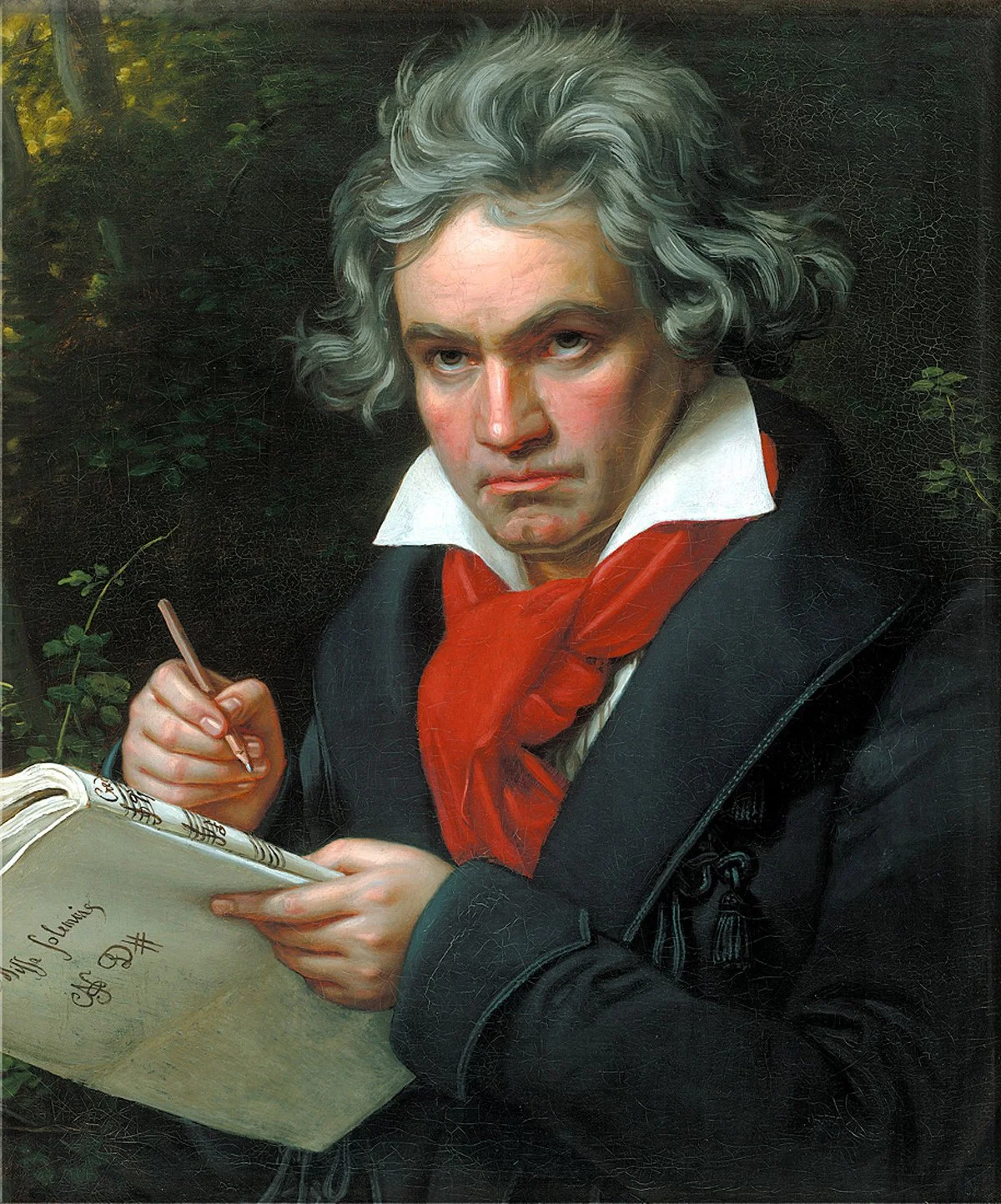
Ludwig van Beethoven
Born: December 17, 1770 (baptism date), Bonn, Germany.
Died: March 26, 1827, Vienna, Austria.
Certainly the best-known of Beethoven’s orchestral works is the stunning fifth symphony. Beginning with the unforgettable four-note motive that dominates the first movement, Beethoven continuously develops his musical ideas through a lyrical slow movement, a fierce scherzo, and a triumphant finale.
“It is merely astonishing and grandiose.”
-
Although preliminary sketches of Beethoven’s Symphony No.5 date from as early as 1804, the bulk of the work was written in 1807-08, at roughly the same time as the Symphony No.6. Both symphonies were performed for the first time at a benefit concert in Vienna on December 22, 1808. The program for this landmark (and marathon) event also included excerpts from his Mass in C and the concert aria Ah, perfido, together with premieres of two works with Beethoven himself at the piano, the Piano Concerto No.4 and the hastily-composed Choral Fantasy. After a bit of initial resistance from audiences and his fellow musicians—this was, after all, a truly avant garde work—the Symphony No.5 was recognized as a masterpiece, and has remained the single most familiar of Beethoven’s works since then.
This was a remarkable work for its time…or any time. Though not as long as his groundbreaking “Eroica” symphony of 1803, this work is played by an expanded orchestra that includes instruments seldom heard in earlier symphonies: piccolo, contrabassoon, and trombones. Beethoven was obviously proud of this innovation, and wrote to Count Franz von Oppersdorf that “...this combination of instruments will make more noise, and what is more, a more pleasing noise than six kettledrums!” Also new is the degree to which all of the four movements are linked thematically. The famous four-note motive of the opening movement reappears in all three successive movements, and nearly all of the main musical ideas are linked in some way.
-
There is no more recognizable motive in Western music than the opening four notes of the first movement. Whether or not Beethoven attached a specific meaning to this motto is unclear. His first biographer, Anton Schindler reported that Beethoven referred to this motive as “Fate knocking at the door,” but this may be apocryphal. Later times have attached all sorts of meanings it. For example, during World War II, because of its identity with the Morse Code “V,” it became the musical emblem of Allied victory. At the same time, it was viewed as one of the most purely “German” nationalistic works by the Nazis. In purely musical terms, however, Beethoven’s use of this rhythm in the opening movement is a work of genius. With two statements of this four-note motto, Beethoven brusquely tosses aside the stately Classical tradition of long, slow introductions, and jumps directly into the body of the movement (Allegro con brio). The opening theme is almost entirely spun out from the motto, and even the second theme, stated sweetly by the strings, is brazenly announced by the motto from the horns. The motto is also the focus of the development section, which includes some stunning antiphonal effects. The headlong rush of the recapitulation is abruptly broken by a brief oboe cadenza, seemingly at odds with the nature of this movement, but actually a logical continuation of the main theme. Beethoven reserves his most savage fury for the coda, the longest single section of this movement, and another section of intense development.
The second movement (Andante con moto) is a very freely-constructed theme and variations. The theme is laid out first by violas and cellos and then more robustly by full orchestra. After three imaginative variations, Beethoven launches into a section of very free development, beginning with a lovely pastoral passage from the woodwinds. The scherzo (Allegro) begins mysteriously in the low strings but soon picks up as much power as the opening movement, with a statement of the motto by the horns. The central trio moves from minor to major, and has a blustering theme in the lower strings developed in fugal style. When the main idea returns, it is strangely muted, and it quickly becomes apparent that this movement is not going to end in any conventional way. In place of a coda, there is a long and mysterious interlude, building gradually towards the most glorious moment in this work: the triumphant C Major chords that begin the finale.
The fourth movement (Allegro) is where Beethoven suddenly augments the orchestra with trombones and contrabassoon. This orchestral effect, probably inspired by contemporary opera, is stunning. The opening group of themes, stated by full orchestra, is noble and forceful and the second group, played by strings and woodwinds is more lyrical, but no less powerful. The development focuses on the second group of themes, expanding this material enormously. Just as the development section seems to be finished, there is a reminiscence of the scherzo—bewildering at first, but then perfectly logical as it repeats the movement’s transitional passage and leads to the return of the main theme. While the recapitulation is rather conventionally laid out, the vast coda continues to break new ground. As in the development section, things seem to be winding to close when Beethoven takes an unexpected turn: in this case a quickening of tempo to end the symphony in a mood of grand jubilation.
-
According to an account by Hector Berlioz, he brought his former teacher Jean-François Le Seur to an early performance of the Symphony No.5 in Paris. After the final bars, the old man was so excited by the piece that his head was reeling, and he wryly complained that: “One should not be permitted to write such music.” Berlioz replied: “Calm yourself—it will not be done often.”
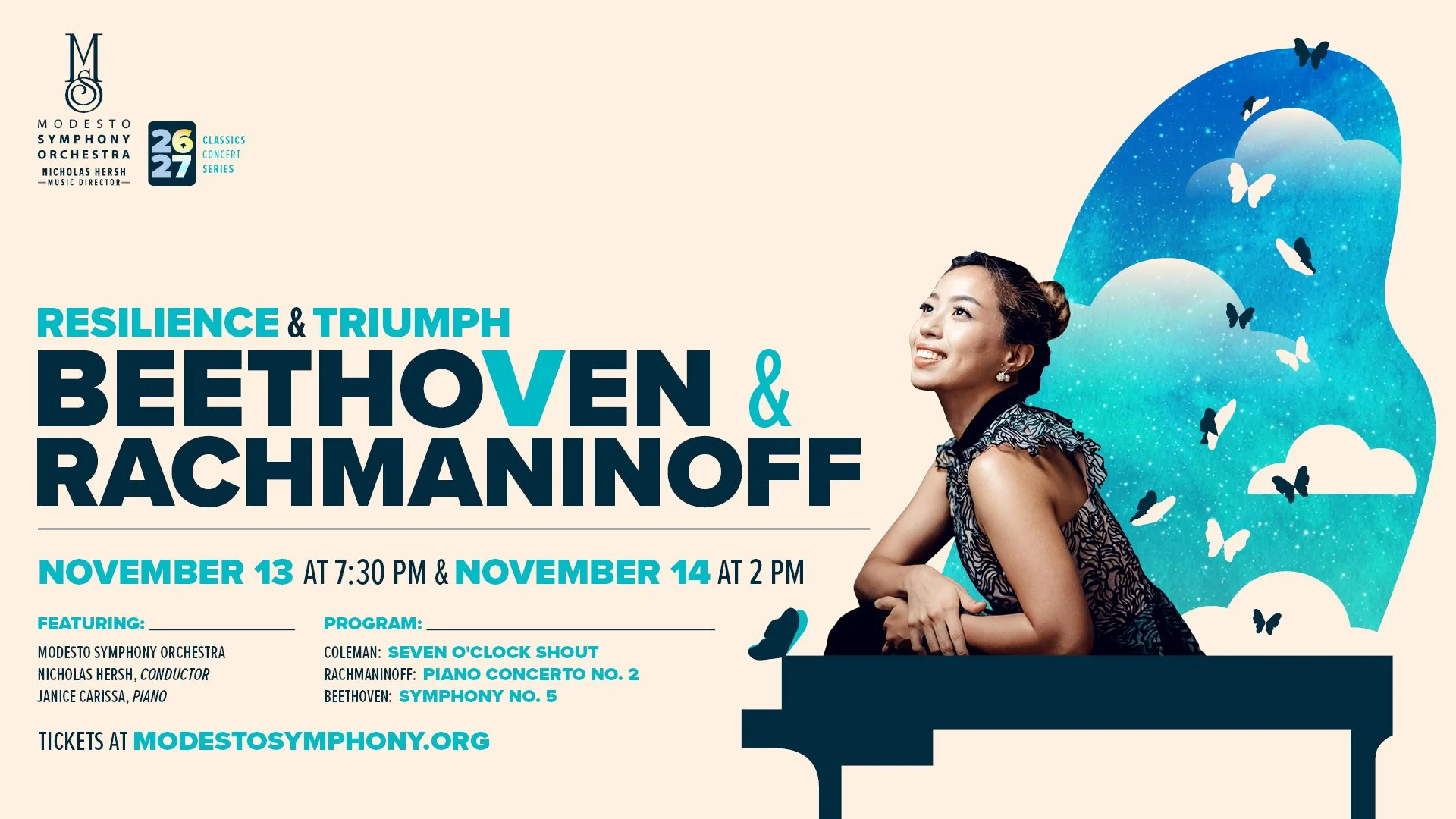
More about this concert:

Program notes ©2026 by J. Michael Allsen